
 Buy now, Pay later

What voids a mattress warranty and what to check

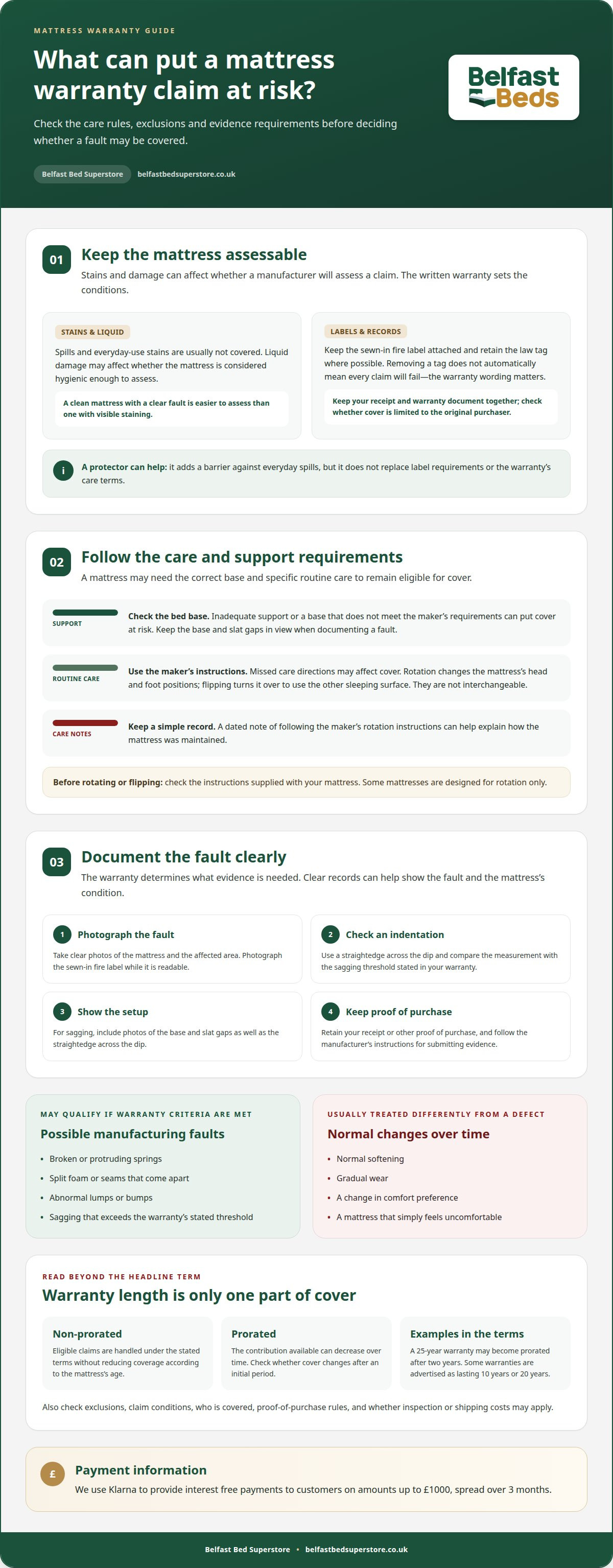
A small stain or an unsuitable bed base can put a mattress warranty claim at risk. Knowing what voids a mattress warranty starts with the exclusions: liquid damage, a missing permanent label, inadequate support or missed care instructions may affect cover, depending on the terms. Manufacturing faults and sagging may be covered if they meet the warranty criteria.
It’s understandable to expect a warranty to help if a mattress develops a fault. But stains and damage can complicate a claim, while normal softening or a change in comfort preference is generally treated differently from a defect.
This guide explains how stain and sagging rules work, what to look for in the warranty, and how rotating, flipping and bed-base requirements can affect cover. If you’re considering a replacement, we use Klarna to provide interest free payments to customers on amounts up to £1000, spread over 3 months.
Key Takeaways
- Read the exclusions and care instructions in your warranty, especially how it treats stains and hygiene.
- Keep the sewn-in fire label in place and retain your proof of purchase.
- Follow the maker’s instructions for rotating or flipping the mattress and check that the base meets its support requirements.
- Measure a suspected indentation with a straightedge and compare it with the sagging threshold in your warranty.
- Separate manufacturing faults from normal softening or comfort changes when considering whether to make a claim.
1. Do mattress warranties cover stains?
Mattress warranties usually don’t cover stains caused by spills or everyday use. A stain may affect whether the manufacturer considers the mattress hygienic enough to assess, so liquid damage can put a claim at risk. Check the warranty terms: they explain which defects are covered and what condition the mattress must be in. A clean mattress with a clear fault is easier to assess than one with visible staining.
Manufacturer warranties and guarantees generally cover faults in materials or construction that cause premature failure. Common examples include broken or protruding springs, split foam, seams that come apart, and abnormal lumps or bumps. Sagging may qualify if the indentation exceeds the threshold stated in the warranty. Normal softening, gradual wear and a mattress that simply feels uncomfortable are usually treated differently from a manufacturing defect.
Coverage can also change over the warranty period. Non-prorated cover generally means the manufacturer handles an eligible claim under the stated terms without reducing the coverage according to the mattress’s age. Prorated cover can mean the contribution available decreases over time. For example, a 25-year warranty may become prorated after two years, while some mattress warranties are advertised as lasting 10 years or 20 years. The headline length alone doesn’t show how useful the cover remains.
Compare the warranty length, exclusions, claim conditions and any change from non-prorated to prorated cover. Some warranties switch coverage after an initial period, such as the first year. Check whether cover applies only to the original purchaser, whether inspection or shipping costs may apply, and whether proof of purchase is required. Keep your receipt and warranty document together. A dated care note, such as a record of following the maker’s rotation instructions, can help explain how you maintained the mattress.
A manufacturer’s warranty is separate from your statutory rights. According to UK legislation, the Consumer Rights Act 2015 gives UK consumers 30 days from taking ownership of a faulty product to claim a refund. If an online purchase is involved, UK legislation provides a 14-day cooling-off period from the date the goods arrive. If a fault appears after 30 days but within six months, UK legislation provides an entitlement to repair or replacement under the Consumer Rights Act 2015.
For a warranty claim, keep your receipt or other proof of purchase and follow the manufacturer’s instructions. Photograph the mattress and the fault. For sagging, include the base, slat gaps and a straightedge across the dip. Photograph the sewn-in fire label, too. Care notes can help show that you followed the required instructions, but the warranty’s written terms determine the evidence and conditions for assessment.
2. At a glance: what should you check in a mattress warranty?
Check the warranty’s wording about labels, proof of purchase and claim evidence. A sewn-in fire label and a law tag may look like ordinary mattress tags, but removing them can complicate a claim. The terms explain which labels must remain attached and what the manufacturer expects to see. Don’t assume every tag serves the same purpose or that every warranty treats removal in the same way.
The permanent sewn-in fire label is the label most likely to matter during warranty assessment. It can help identify the mattress and provide fire-safety information. Removing it may cause a problem if the manufacturer requires it for a claim. Keep it attached, even if its position makes changing bedding less convenient. A loose corner is different from a label that has been cut away, so photograph any damage before taking further action.
It’s also worth keeping the law tag in place. Mattress warranties may refer to it as the law label, and leaving it attached can help meet claim requirements. Removing a law tag doesn’t automatically mean every claim will fail, but the manufacturer’s written conditions matter. If the tag is already missing, keep your receipt and take clear photos of the mattress, the label area and any broken part. Explain when you noticed the missing tag.
Before a fault appears, check the warranty for the following details:
- Which sewn-in fire label or law tag must remain attached.
- Whether the warranty applies to the original consumer or purchaser.
- What proof of purchase, such as a receipt, supports a claim.
- Which photos the manufacturer needs to assess a broken component.
- Whether a stain or unhygienic condition affects claim assessment.
- How to report a fault and where to send supporting evidence.
Keep the receipt and warranty document together, then photograph the mattress label while it’s readable. If a label becomes loose, don’t remove it to make handling the bed easier. Photograph its condition and keep any detached section. These steps create a useful record without altering the mattress or concealing a problem.
Read the care instructions alongside the label rules. A warranty may set separate conditions for cleanliness, support and routine care. Following those directions makes it easier to describe the mattress’s history if a defect develops. Save relevant records, such as dated photos of a fault, instead of relying on memory when making a claim.
A mattress protector can add a barrier against everyday spills, helping keep the mattress cleaner. It doesn’t replace the warranty’s label requirements, so leave sewn-in tags attached and follow the care terms.
3. Rotating or flipping the mattress as required
Follow the care instructions supplied with the mattress, because rotation and flipping aren’t interchangeable. Rotating means changing the position of the mattress so its head and foot ends swap places. Flipping means turning it over so the other sleeping surface faces up. Some mattresses are designed for rotation only. Check the maker’s guide before flipping, as the mattress construction determines which care method applies.
Skipping required rotation can contribute to uneven wear and put a warranty claim at risk. If the guide says to rotate the mattress, for example, repeatedly sleeping in the same position may concentrate pressure in one area. Follow the maker’s schedule rather than guessing a routine. Keep a simple dated note each time you rotate it. That record can help explain how you cared for the mattress if a fault needs assessment.
Support matters too. A mattress warranty may require a suitable, supportive bed frame, and slats spaced too far apart can undermine support. The written limits differ: some guarantees exclude bases with gaps over 5 cm, while some makers specify a maximum gap near 7 cm for foam-heavy mattresses. These figures aren’t interchangeable rules. Use the limit in your own warranty leaflet, and measure the gaps between slats before placing the mattress.
Stains can affect whether a manufacturer assesses a claim, as mattresses may need to be hygienic. A protector can help shield the surface from spills, but it doesn’t replace the maker’s cleaning instructions. If liquid spills, blot it promptly with a clean cloth rather than rubbing it into the fabric. Follow the label’s cleaning method and let the mattress dry fully before covering it again. Avoid soaking foam or using cleaning products the maker doesn’t recommend.
Keep the original care leaflet with the receipt and warranty. It can clarify the correct rotation method, approved cleaning steps and base requirements. If you notice a stain, damaged fabric or a change in support, take photos before cleaning or moving the mattress. Don’t attempt a repair that could alter the mattress or conceal the fault. Describe what happened, when you noticed it and which care steps you followed.
A simple routine helps protect the mattress and keep its care history clear:
- Read the maker’s instructions to confirm whether the mattress rotates, flips, or both.
- Use the stated rotation schedule and record each turn.
- Measure the bed-frame slat gaps against the warranty’s limit.
- Use a protector and follow the approved cleaning method for stains.
- Keep photos and care records with the original purchase documents.
4. Sagging thresholds and how to measure an indentation
A body impression is a dip where the mattress has compressed under use. Warranty terms distinguish a qualifying structural fault from gradual softening. Many warranties set a sagging threshold between three quarters of an inch and an inch and a half. The manufacturer sets the exact depth, so the threshold in your warranty determines whether the indentation can support a claim.
Mattress warranties generally exclude normal softening and changes in personal comfort. A shallow impression below the stated depth may be considered expected wear, not a defect. Substantial sagging may be covered if it exceeds the maker’s threshold and meets the warranty conditions. Feeling less comfortable, by itself, doesn’t show that the mattress has a covered fault.
Measure the impression with nobody on the bed. Remove the bedding and let the mattress settle flat on its usual base. Lay a straightedge across the surface, spanning the dip without pressing down. Use a ruler to measure the deepest gap between the straightedge and the mattress. Compare the measurement with the written depth threshold. The manufacturer may review a claim if the indentation exceeds that limit.
Use the same method each time you measure. Place the straightedge across the centre of the dip, not along its slope, and keep it level. Record the measurement and where the impression appears, such as the centre or one side of the sleeping area. Take photos with the ruler visible beside the gap. A clear image documents the depth and location without relying only on memory.
- Read the warranty’s sagging threshold before measuring.
- Measure with the bed unoccupied and the mattress on its usual base.
- Use a straightedge and ruler to show the deepest point.
- Photograph the measurement and note the date and location.
Thresholds vary between manufacturers, and there is no single standard millimetre depth for every mattress. One warranty may assess a dip at a different depth from another. Don’t convert a stated inch measurement into a rounded millimetre figure; compare your measurement using the same unit as the warranty. A dip below the written limit may not qualify, even if it feels noticeable when you lie down.
Before submitting a sagging claim, keep the measurement, photos and warranty terms together. Include a photograph of the mattress and base, since support conditions can affect how an indentation is assessed. If the dip exceeds the threshold, describe its location and depth clearly. This gives the manufacturer concrete evidence to assess against the written coverage, rather than a general report that the mattress feels uneven.
5. Actions that can void a mattress warranty
To understand what voids a mattress warranty, start with how the mattress is used, supported and maintained. A claim can fail if the problem results from an excluded action rather than a manufacturing defect. A broken spring, for example, is different from damage caused by a spill, unsuitable base or unauthorised alteration. Read the exclusions for your specific mattress and keep them with the purchase documents.
Stains are a common risk. Liquid can damage foam layers, while visible dirt may affect whether the mattress meets the hygiene requirements for assessment. A protector helps shield the surface from everyday spills, but it doesn’t change the warranty terms. If liquid spills on the mattress, follow the maker’s cleaning instructions and let it dry fully. Don’t scrub aggressively or use a product that could damage the fabric or filling.
Support is another key condition. A frame with slats spaced too far apart can leave parts of the mattress unsupported and put cover at risk. Some guarantees exclude use on bases with slats more than 5 cm apart. Measure the gaps and compare them with the specific warranty leaflet, because brands set their own requirements. A supportive foundation matters for foam and spring mattresses alike; larger beds may also require rigid centre support.
Care instructions matter, too. If the maker requires rotation, skipping it can cause uneven wear and weaken a later claim. Flip a mattress only if its design and instructions allow it. Don’t bend, fold or stand it in a way that damages its construction. Keep the permanent sewn-in label attached, and avoid cutting or modifying the cover. These actions can obstruct identification or conflict with the claim conditions.
Purchase details matter as much as care. Warranty coverage often applies only to the original purchaser, subject to the written terms. A mattress bought from a third-party retailer may not include the manufacturer’s warranty. Keep the receipt and check which warranty applies to the seller and mattress. A sleep trial and a warranty are separate: a trial lets you try the mattress, while a warranty addresses specified defects.
A practical way to remember what voids a mattress warranty is to keep the mattress clean, supported and cared for as instructed. Before submitting a warranty claim, gather the receipt, warranty terms and clear photos of the mattress, base and fault. Describe the issue plainly, such as a stain, damaged seam or broken spring, and include relevant care records. Don’t attempt repairs before documenting the damage. For a replacement mattress, explore mattress options and choose one suited to your bed base and care routine.
Belfast Bed Superstore: Mattress Protectors
Belfast Bed Superstore offers Mattress Protectors to help shield your mattress from everyday spills and keep its surface cleaner. A protector supports good care, but it doesn’t replace the manufacturer’s warranty conditions or cleaning instructions. Choose one if you want an extra layer between the mattress and common household marks.
If you’re replacing your mattress, Belfast Bed Superstore also offers Hypnos Mattresses, Sealy Mattresses and Relyon Mattresses. Warranty and care terms vary by mattress, so read the product documentation to understand its specific requirements for support, cleaning and maintenance.
For help choosing a Mattress Protector or finding a mattress that suits your needs, contact Belfast Bed Superstore in Cambridge.
Make your next mattress choice with confidence
Understanding what voids a mattress warranty can help you make a considered replacement choice. Belfast Bed Superstore offers Hypnos Mattresses, Sealy Mattresses and Relyon Mattresses, giving you options to explore as you think about the feel and support you want from your next mattress.
Take your time choosing a mattress that suits your sleep preferences and bedroom setup. A thoughtful choice can make settling into a new routine easier.
If you’d like help with your next step, contact Belfast Bed Superstore. We’re here to help you move towards a more comfortable night’s rest.
Frequently Asked Questions
At a glance: what should you check in a mattress warranty?
Check the warranty’s exclusions, claim steps and conditions for the mattress base, labels and care. Note whether cover applies to the original purchaser, what proof of purchase is accepted, and whether the manufacturer changes cover over time. For example, save the warranty document with your receipt, then note the exact contact method and evidence requested. These details help you prepare a claim without overlooking a condition.
Do mattress warranties cover stains?
Stains caused by spills or everyday use usually aren’t covered as manufacturing defects, and they can affect whether a claim is assessed. A stained mattress may fail a hygiene condition even if you’re reporting a separate fault, such as a broken spring. Keep photos of the fault and stain, and describe them accurately. The warranty wording determines how cleanliness and damage affect the specific claim.
What Does It Not Cover?
Warranty exclusions commonly include normal softening, a change in comfort preference, stains, accidental liquid damage and wear from use. A fault caused by an unsuitable base or failure to follow required care may also fall outside cover. Wanting a firmer feel, for instance, isn’t the same as a construction fault. Read the exclusions alongside the defect definitions, since the cause of the problem matters.
What is the difference between a prorated and non-prorated mattress warranty?
A non-prorated warranty provides the stated coverage for eligible defects without reducing it according to the mattress’s age. With prorated cover, the manufacturer’s contribution can decrease as the mattress gets older. A warranty may switch between these arrangements during its term. Read the dates and conditions for each stage instead of judging cover by the headline warranty length alone.
Can the wrong bed frame void a mattress warranty?
Yes, using a base that fails the warranty’s support requirements can put coverage at risk. Slat spacing limits vary: some guarantees exclude bases with gaps over 5 cm, while some makers specify a maximum near 7 cm for foam-heavy mattresses. These aren’t universal limits. Measure the frame and compare it with the mattress’s own warranty, including any centre-support requirement for larger sizes.
Does cutting off the fire label void cover?
Removing the permanent sewn-in fire label can cause a warranty problem if the maker requires it for identification or claim assessment. It doesn’t mean every claim is automatically rejected; the written terms determine the effect. A removable hang tag is different from a sewn-in label. If the permanent label is already missing, keep the purchase receipt and photograph the mattress and label area.
How Do Sagging Claims Actually Work?
A sagging claim is assessed against the manufacturer’s written depth threshold and other warranty conditions. Measure the empty mattress with a straightedge and ruler, then photograph the gap, mattress and supporting base. Keep the receipt and describe where the indentation appears. Submit the details in writing through the maker’s claim process. Clear evidence helps distinguish a measurable defect from a comfort concern or normal softening.
How deep does a sag have to be to qualify for a warranty claim?
There’s no single depth that qualifies every mattress. Many warranties set a body-impression threshold between three quarters of an inch and an inch and a half, while some require proof that sagging exceeds one and a half inches. Compare the measured indentation with the exact threshold in your warranty. Measure with nobody on the bed, and keep the ruler visible in your photographs.