
 Buy now, Pay later

Understanding Mattress Guarantees and Warranties: What’s Covered
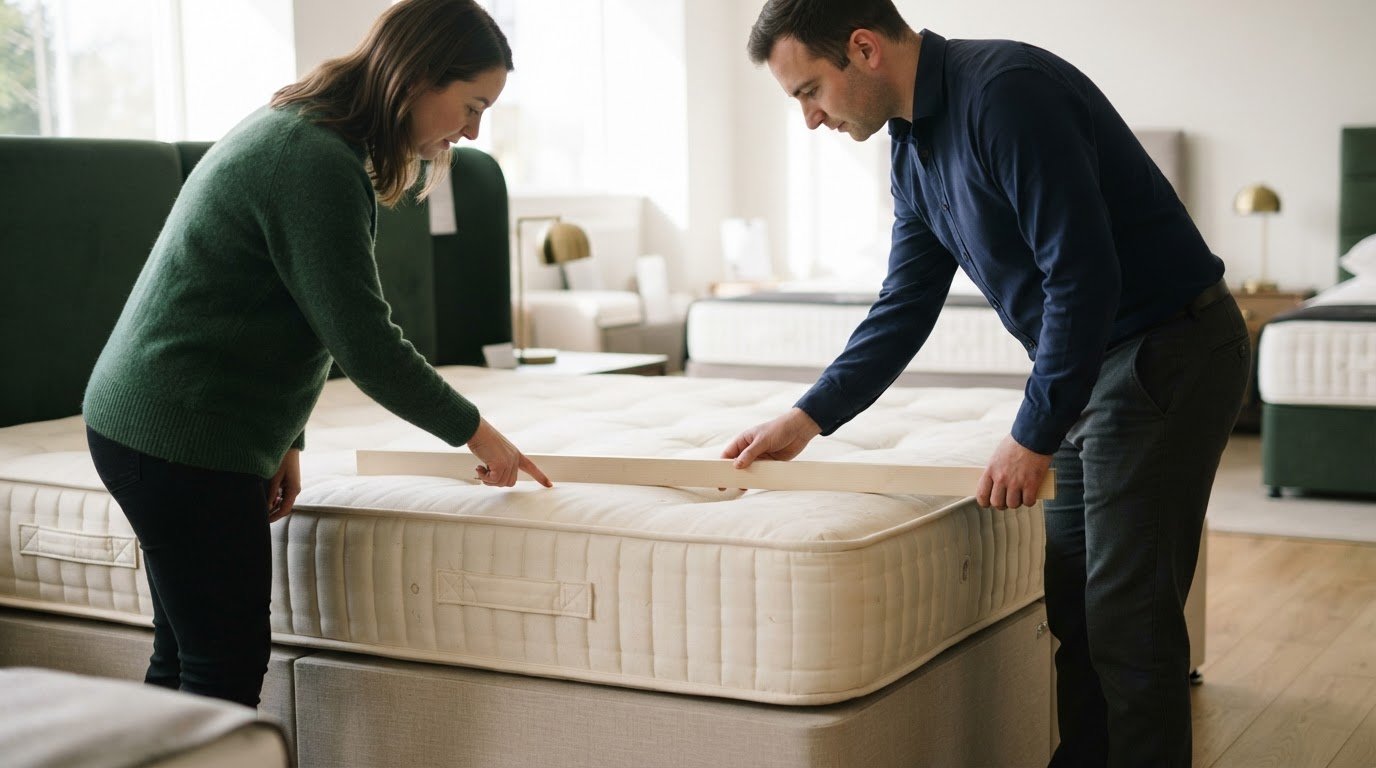
A long mattress warranty doesn’t necessarily mean every problem is covered. Understanding mattress guarantees and warranties starts with the key distinction: they generally cover faults in materials or workmanship, not a change in comfort preference. The exact cover, exclusions and claim process depend on the terms for your mattress.
It’s reasonable to expect clear protection when you invest in a mattress, and knowing what the paperwork says can make a fault easier to deal with. In the UK, the Consumer Rights Act 2015 also provides statutory consumer rights alongside any guarantee or warranty, according to the UK Government.
This guide explains what may be covered, which exclusions to look for, how to make a claim and where to find the terms. It also compares guarantee information for selected mattress brands, so you can understand what to look for before choosing a mattress. We use Klarna to provide interest free payments on amounts up to £1000, spread over 3 months.
Key Takeaways
- Guarantees generally cover manufacturing faults, not a change in comfort preference. The exact terms determine which faults qualify and how sagging is assessed.
- The UK Consumer Rights Act 2015 provides statutory consumer rights alongside mattress guarantees and warranties, according to the UK Government.
- Keep proof of purchase and the warranty terms handy. A claim typically needs a clear description of the fault and supporting evidence.
- Look for exclusions covering wear, misuse, stains, unsuitable bases and second-hand ownership, as these can affect a claim.
- Guarantee periods vary by brand and model. For example, Hypnos, Sealy and Dunlopillo mattresses have different listed terms, so identify the specific model before relying on a duration.
What Do Mattress Guarantees Usually Cover?
A mattress guarantee or warranty usually covers qualifying faults in materials or workmanship, not a change in comfort preference. Its terms explain which defects qualify, what remedy may apply and whether cover reduces over time.
Manufacturing Defects and Covered Damage
A manufacturing defect is a fault in materials or workmanship that was present when the mattress left the factory. Depending on the policy, covered problems may include broken coils, split foam, ripped seams, damaged fabric, faulty stitching or a broken zip. This distinction matters because a warranty claim needs to relate to a covered defect, not simply an unsatisfactory feel.
Sagging is usually assessed with no weight on the mattress, against the indentation threshold in its terms. Some warranties require proof of sagging greater than one and a half inches. A visible dip alone may not establish a covered fault; the measurement method and threshold in the warranty matter.
Coverage Across Mattresses, Beds, and Bedding
Coverage applies to the product and components named in the relevant guarantee or warranty, rather than automatically covering every item in a bedroom. A mattress policy may specify the mattress materials, while a bed or bedding product may have separate terms or no matching coverage. This matters if a fault appears in a bed base, cover or accessory rather than in the mattress itself.
Read the product description and warranty together to identify what the manufacturer covers. A claim about a mattress spring, for example, concerns a different component from damage to a bed frame. Keep the product paperwork with your purchase details so you can match the fault to the right terms.
Prorated and Non-Prorated Coverage
Non-prorated coverage provides the stated remedy without reducing it according to the mattress’s age, subject to the warranty terms. Prorated coverage reduces the manufacturer’s contribution over time, which can leave the owner paying part of a replacement cost. The distinction matters because the headline warranty length alone doesn’t show what a later claim may provide.
Some warranties combine both approaches. One example provides non-prorated coverage for the first two years, then changes to prorated cover. Under a five-year contribution scale, the first year has full guarantee with no contribution; later customer contributions can rise according to the stated schedule. Read whether the policy offers full replacement or prorated coverage, and how it calculates any contribution.
Replacement, Repair, Refund, and Transfer Options
Whether a warranty provides repair, replacement or another remedy depends on its written terms. A replacement may be full or prorated, while a refund is not automatically part of warranty cover. Check what the policy says about the particular fault and remedy before treating the warranty length as a promise of a new mattress.
For a faulty mattress under UK consumer law, the UK Consumer Rights Act 2015 provides statutory consumer rights alongside mattress guarantees and warranties, according to the UK Government. Those statutory rights sit alongside the manufacturer’s warranty; they are not the same thing.
Most mattress guarantees aren’t transferable when a mattress is bought second-hand. If ownership changes, the new owner shouldn’t assume the original warranty still applies; the policy’s transfer terms determine whether cover continues.
Warranty claim processes and after-sales support
A clear record makes it easier to explain a fault and match it to the warranty terms. Keep proof of purchase and the manufacturer’s conditions together, then describe the problem in writing and include relevant evidence.
Documenting and Submitting a Claim
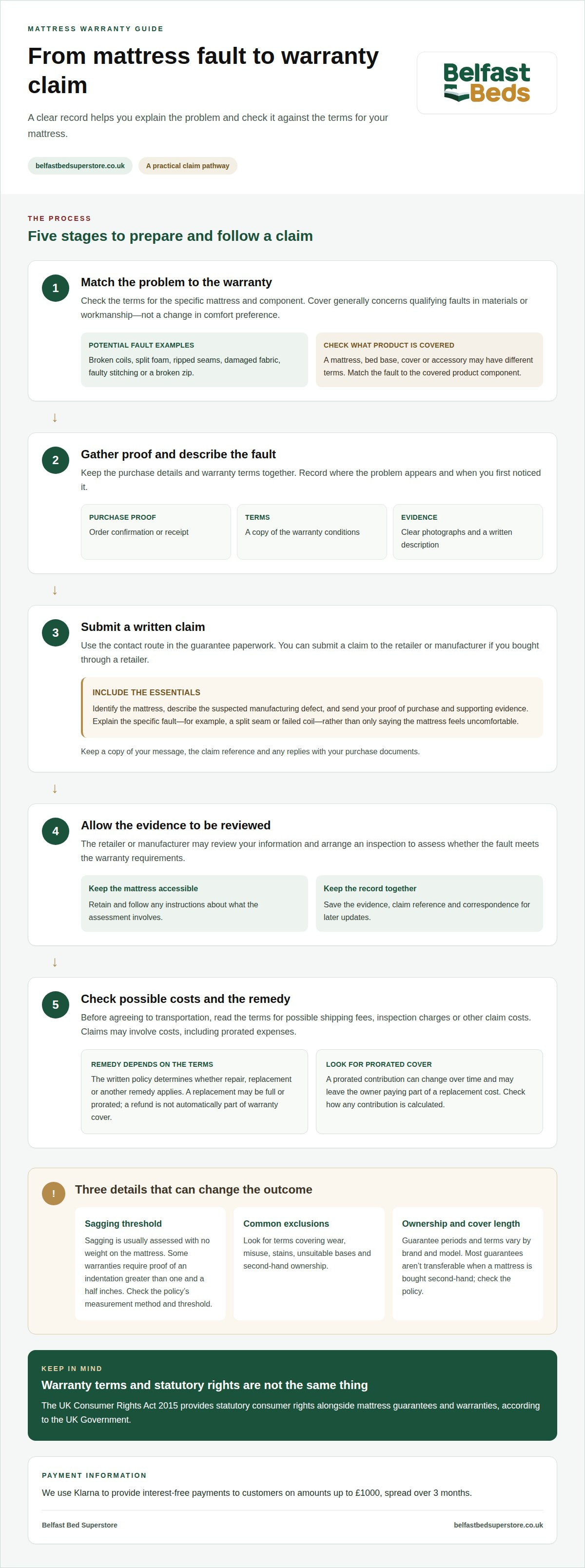
Documenting a claim means recording the fault, purchase details and evidence before contacting the retailer or manufacturer. This helps them assess whether the problem matches a covered defect. Keep the order confirmation or receipt, the warranty copy and clear photographs showing the fault. Describe when you first noticed it and where it appears.
Send the claim in writing with your proof of purchase and supporting evidence. For example, explain where a seam has split or a coil has failed, rather than simply saying the mattress feels uncomfortable. Keep a copy of your message and any reply with the purchase documents.
Registering a Guarantee Claim
Registering a guarantee claim means notifying the retailer or manufacturer that you believe a fault falls within the product’s terms. The written claim should identify the mattress, describe the problem and include proof of purchase. These details help connect your report to the right product and warranty conditions.
Use the contact route described in the guarantee paperwork, and state that you’re seeking help with a suspected manufacturing defect. If you bought through a retailer, you can submit the claim to the retailer or manufacturer. Keep the claim reference and correspondence so later updates relate to the same report.
Inspections and Claim Costs
After a claim is reported, the retailer or manufacturer may review your evidence and arrange an inspection. An inspection can help establish whether the fault meets the warranty’s definition and requirements. Keep the mattress accessible and retain any instructions about what the assessment involves.
Read the terms for possible shipping fees, inspection charges or other claim costs before agreeing to transportation. Warranty claims may involve costs, including prorated expenses. If the warranty offers prorated cover, the owner may need to contribute towards a replacement. The amount and responsibility depend on the policy’s terms.
Respond promptly if the retailer or manufacturer requests further information. A useful reply refers to the original claim, answers each point and attaches relevant evidence. Keep new photographs or inspection correspondence with your existing records. This creates a consistent account of the fault and the steps taken.
Keep the original paperwork in printed or digital form. If the mattress was bought online, an order confirmation email can serve as proof of purchase. If the receipt is missing, look for another purchase record that identifies the transaction and product. A tidy record helps you explain the purchase clearly.
For a future mattress purchase, a suitable protector can help guard the surface from stains, which may affect warranty claims. Explore mattress protectors as one way to help keep your mattress clean.
Common guarantee and warranty exclusions
Warranty exclusions define the conditions and types of damage that fall outside cover. They matter because normal wear, care practices and mattress use can affect a claim.
Normal Wear and Mattress Softening
Normal wear includes changes from regular use, such as minor body impressions that stay within the depth allowed by the warranty. The stated threshold is often around 2-4 cm. This matters because a mattress can soften over time without having a manufacturing defect, even if its comfort feels different.
A sagging claim is assessed against the warranty’s measurement method and indentation threshold. Some policies require more than one and half inches of sagging; guidance also gives 1.5 inches, approximately 4 cm, for traditional innerspring or hybrid mattresses, and 0.75 inches, approximately 2 cm, for high-density memory foam or latex mattresses. A 10-year warranty doesn’t mean comfort remains unchanged for the whole term.
Other Common Warranty Exclusions
Other common exclusions include damage from misuse, significant stains, an unsuitable or unsupportive base, and commercial use of a mattress sold for domestic use. These conditions matter because a stain can weaken or void a claim, even if the reported fault is unrelated. A second-hand buyer also usually can’t transfer the original guarantee.
Base requirements can be specific. Some terms require rigid slats no more than 7.5 cm apart, while other guidance suggests slats typically sit 5-7 cm apart. A bed frame for a mattress sized 150 cm or larger may need a central support leg reaching the floor. The applicable warranty wording explains the manufacturer’s conditions.
Use the warranty’s wording to distinguish a fault from wear and tear. For example, a broken coil or split foam may count as a covered defect, while a shallow impression within the stated limit may be treated as normal use. That difference can determine whether a claim qualifies.
Before making a warranty claim, compare the reported problem with the exclusions and care requirements. Note whether the mattress has a stain, rests on the required base or has been used commercially. These details help explain the circumstances clearly, but they don’t replace the manufacturer’s assessment under its terms.
- Comfort: a changed firmness preference is generally not a fault.
- Care: use the mattress and base as the manufacturer’s instructions require.
- Ownership: second-hand purchases usually don’t carry transferable guarantee cover.
How can I find my guarantee or warranty length and terms and conditions?
The warranty period and conditions depend on the product, model and purchase terms. Use the paperwork for your specific mattress or bed, rather than relying on a general statement about a brand. To understand mattress guarantees and warranties, match the product details to the document supplied with that purchase.
Finding Product-Specific Terms
Product-specific terms are the written conditions linked to a particular model and purchase. They matter because two products from one manufacturer can have different warranty lengths and exclusions. Start with the warranty document, guarantee card or product paperwork supplied at purchase.
If those papers are stored digitally, search your order confirmation and email attachments. Match the product name or model to the terms, then read the sections covering length, defects, replacement and normal wear. Keep a copy with your proof of purchase so you can refer to the same conditions if a fault appears.
For a bed and mattress bought together, establish whether the terms cover each item or only one. A mattress warranty may not apply to the bed frame, and a bed’s conditions may be separate. The product names and model details on your purchase record help distinguish them.
Terms That Vary by Purchase Date
The purchase date can matter because the applicable terms may change between product versions or sales periods. Use the conditions provided for the model and purchase, rather than assuming current wording applies to an earlier transaction. This can affect the warranty period, covered components and claim requirements.
Find the date on your receipt or order confirmation, then keep it alongside the warranty document. If the product name appears in several versions, match the model details as well as the purchase date. A saved copy of the original terms can help clarify which conditions relate to your purchase.
Terms also differ between mattresses and beds, even when sold as one set. Treat each product’s stated cover separately, and note any conditions that apply to the whole set. This avoids assuming that one item’s warranty automatically protects another.
Warranty Length and Conditions
Mattress warranties commonly last 5, 10 or 20 years, and some terms include lifetime coverage. The period alone doesn’t describe the full protection. Read how the warranty handles normal wear, what defects qualify, and whether coverage changes during its term.
Some warranties advertise 10 years or 20 years, while terms vary by brand and model. A longer stated length doesn’t necessarily mean every repair or replacement is covered throughout. Check whether the remedy is full or prorated, and whether the terms require correct use and care.
Understanding mattress guarantees and warranties also means distinguishing the advertised length from the conditions attached to it. For any named mattress or bed model, use its own written terms to identify the warranty length and conditions. Keep the product details, purchase date and documents together. That gives you a clear reference if you need to understand what remains protected during the warranty period.
Brand-by-brand guarantee and warranty listings
Brand names give you a starting point, but the model determines the relevant guarantee length. Hypnos, Sealy and Dunlopillo illustrate why the original product terms matter: their listed periods differ, and some vary by model. Use the brand comparison below to identify what to look for in the paperwork.
- Hypnos: Hypnos mattresses have a 10-year guarantee.
- Sealy: Sealy mattresses have a guarantee of 5 or 7 years, depending on the model.
- Dunlopillo: Dunlopillo mattresses have a guarantee of 10 or 15 years, depending on the model.
These figures are useful reference points, not a substitute for the original guarantee. For example, a Sealy model’s term may differ from another Sealy mattress. The same model-based variation applies to Dunlopillo. Match the mattress name and model to its terms before relying on a stated period.
Hypnos has a listed 10-year guarantee, but the length alone doesn’t explain every condition. The paperwork identifies what the manufacturer considers a covered fault and what remedy applies. Check those details alongside the term, so the headline period isn’t mistaken for cover against every change or type of damage.
For Sealy, the difference between a 5-year and 7-year guarantee makes model identification especially important. Look for the exact model on the purchase record, product label or original documentation. Then compare that information with the guarantee supplied for the purchase. A brand name by itself cannot distinguish which stated period applies.
Dunlopillo’s 10- or 15-year term also depends on the model. Don’t assume that two Dunlopillo mattresses share identical conditions because they carry the same brand. Identify the original model first, then read the relevant guarantee for its duration, qualifying faults and claim requirements.
For other mattress brands, including Relyon, start by comparing each model’s own paperwork. Terms can differ between models, even within a single brand. Record the model name and purchase details together to keep the specific guarantee connected to the mattress rather than a broad brand label.
A longer term doesn’t automatically mean broader protection. Compare the stated period with the remedy, exclusions and any change in cover during the term. For instance, a 10-year guarantee and a 10-year warranty may use different conditions. The exact wording explains what the manufacturer is responsible for.
Use the original guarantee as your reference if a retailer’s product description gives only a short summary. Keep its model name and purchase record together, then check those details against any claim conditions. This simple comparison helps you understand which brand-specific period applies and what it covers.
Explore mattress options and compare the brands available for your bedroom.
Belfast Bed Superstore: Mattress Protectors
Belfast Bed Superstore offers mattress protectors for shoppers who want to protect their mattress surface during everyday use. A protector may be a useful addition, but it doesn’t replace the manufacturer’s care instructions or guarantee terms. Check those terms for requirements about stains and suitable mattress care.
If you’re choosing a mattress too, Belfast Bed Superstore offers Hypnos, Sealy and Relyon mattresses. Guarantee periods can vary by brand and model, so keep the product details and paperwork together after purchase. That makes it easier to refer to the relevant terms if you need them.
For help choosing a mattress protector or exploring these mattress brands, contact Belfast Bed Superstore.
Choose a mattress with confidence
A practical understanding of mattress guarantees and warranties can help you choose with care, but the right mattress also needs to suit how you sleep and the feel you prefer. As you consider your next purchase, compare the comfort and support of the options alongside their written terms. That way, the product and its cover both have a place in your decision.
Belfast Bed Superstore offers Hypnos, Sealy and Relyon mattresses, giving you established brands to consider as you explore your options. Our focus is helping you make a considered choice for your bedroom and everyday rest, without pressure to decide before you’re ready.
If you’d like to discuss your mattress options, contact Belfast Bed Superstore today. A comfortable next step can begin with a simple conversation.
Frequently Asked Questions
📜 What is a Warranty?
A warranty is a written commitment covering specified faults under stated conditions. For a mattress, it usually explains which components or defects qualify, the period of cover and what remedy may apply. Think of it as a set of product-specific conditions, not a promise that the mattress will feel unchanged throughout its life. The manufacturer’s wording determines how its commitment applies to your particular purchase.
What's the Difference Between a Guarantee and a Warranty?
Both describe forms of protection, but the label alone doesn’t tell you what you can claim. A guarantee may be presented as the manufacturer’s assurance, while a warranty sets out detailed conditions and remedies in writing. In practice, read the document rather than relying on its title. For example, two products labelled “guaranteed” could have different fault criteria, exclusions and replacement arrangements.
How Do Sagging Claims Actually Work?
A sagging claim is assessed against the indentation threshold and measurement conditions in the mattress terms. The mattress is generally assessed without weight on it, rather than while someone is lying down. For example, a dip that appears under body weight may not meet the written test. The key question is whether the measured indentation meets that model’s stated threshold, with any base requirements also satisfied.
How Do You Make a Guarantee Claim?
Make a guarantee claim by sending the retailer or manufacturer a written fault report with purchase evidence and supporting details. Identify the mattress and explain what has gone wrong, using a clear description rather than a general comfort complaint. Keep a copy of your message and any reply. For example, describe the location of a split seam and include a photograph showing the affected area.
How do I report an issue?
Report an issue to the retailer or manufacturer using the contact method in the product paperwork. Start with a concise description of the problem, when you noticed it and which part of the mattress is affected. Keep the original purchase record and send a copy as evidence. If the recipient asks for more information, reply within the same correspondence so the details remain attached to your original report.
What Are the Terms?
The terms are the written conditions explaining how a particular guarantee or warranty works. They set out what is covered, what falls outside cover, how long protection lasts and which remedies may apply. Look for the model name and purchase details that match your mattress. For example, terms for a mattress may not describe cover for a separately purchased bed base or accessory.
What is the difference between a mattress guarantee and a warranty?
There isn’t one universal distinction that makes a guarantee broader or stronger than a warranty. Their practical effect comes from the specific wording attached to the mattress. Check the documents for qualifying faults, remedies, exclusions and the claim route, whatever title appears on the cover. If a product description uses one term but the supplied paperwork uses another, rely on the relevant written conditions for that purchase.
How long do mattress warranties typically last in the UK?
Mattress warranties commonly run for 5, 10 or 20 years, and some terms offer lifetime coverage. That range is a guide, not a guarantee that every model from a brand shares the same length. A useful comparison checks the period against the exact mattress model and the conditions attached to it. A longer advertised term may still include limits on faults, remedies or cover over time.