
 Buy now, Pay later

Teenager's Room Beds for Storage and Study Needs
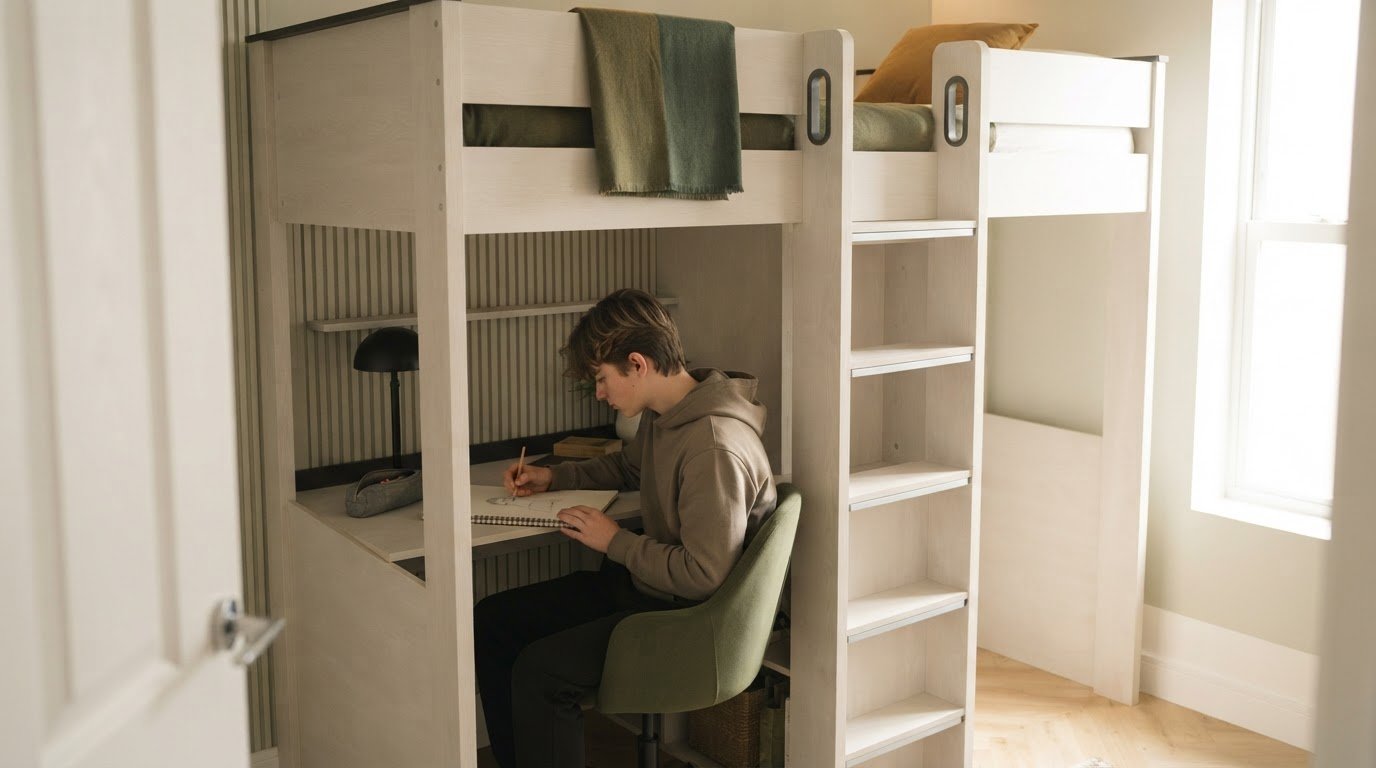
The bed with the most storage isn’t always the best bed for a teenager’s room. A single bed measures 90 x 190 cm, while a small double measures 120 x 190 cm, so the right fit depends on the room and how much space your teenager needs to sleep, study and relax.
Storage matters, but so does leaving room to open drawers, pull out a desk or have friends over. When choosing the best bed for a teenager's room, weigh these everyday needs and compare the access offered by divan drawers and ottoman storage.
We’ll also look at bed sizes, study and social space, comfort and lasting use, so you can make a choice that feels right for your teenager and your home. We use Klarna to provide interest free payments on amounts up to £1000, spread over 3 months.
Key Takeaways
- Choose a bed size that leaves practical room for moving around, opening furniture and using the rest of the bedroom.
- Match storage to the room layout: drawers need space to open, while lift-up storage keeps access above the bed.
- Plan a comfortable study spot and a separate place to unwind, even if both need to share a compact room.
- Look for a sturdy frame and a flexible finish that can suit changing tastes over time.
- Consider how the mattress feels as well as the bed frame when creating a comfortable place to sleep.
Is a single or double storage bed better for a teenager?
The right bed balances sleeping space with room to study and move around. Compare its dimensions with the bedroom layout, storage needs and how the space may be used over time.
Single, Small Double and Double Beds
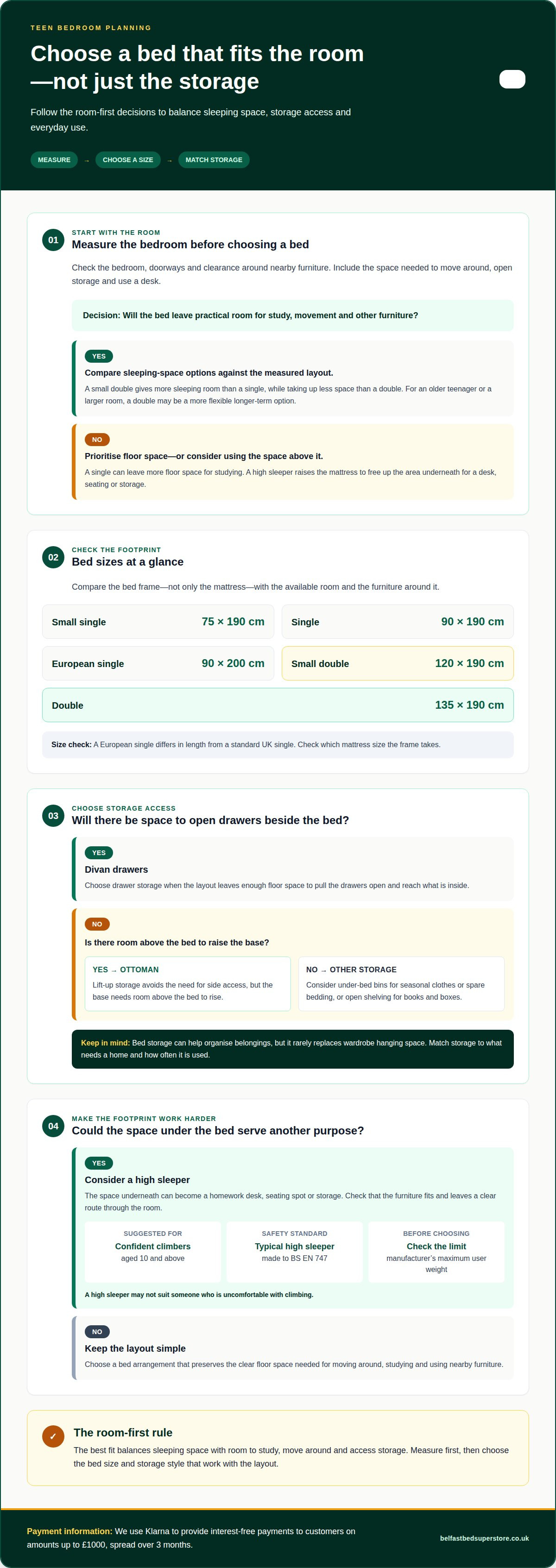
A standard single bed measures 90 x 190 cm, a small double measures 120 x 190 cm, and a double measures 135 x 190 cm. A small single is 75 x 190 cm, while a European single is 90 x 200 cm. These differences matter when a room is narrow or a teenager needs more sleeping space.
Measure the bedroom first, including doorways and clearance around nearby furniture. A single bed can leave more floor space for studying, while a small double gives extra sleeping room without taking up as much space as a double. For an older teenager or a larger room, a double may be a more flexible longer-term option. Consider how the layout could work as their needs change.
High Sleepers and Floor Space
A high sleeper raises the mattress to free up floor space underneath. This area can become a homework desk, a seating spot or storage, making a compact bedroom more functional. Before choosing one, check that the furniture below fits the available measurements and leaves a clear route through the room.
High sleepers are suggested for confident climbers aged 10 and above. A typical high sleeper is made to BS EN 747 safety standards. Check the manufacturer’s maximum user weight, particularly for the raised sleeping platform. The arrangement can suit a teenager who wants sleeping and studying areas in one footprint, but it may not suit someone uncomfortable with climbing.
Storage Beds and Bedroom Clutter
Drawers or an ottoman base can give bedding, clothes and other belongings a dedicated place, reducing the need for extra boxes. Storage can make a bedroom easier to organise, but it rarely replaces wardrobe hanging space. List what needs storing before you choose: folded clothes and spare bedding need different amounts of space from items used every day.
Measure the bed frame and the clearance around it, not just the mattress. Drawers need floor space to open; lift-up storage avoids side access but needs room above the bed to raise the base. A high sleeper provides another option, with space underneath for a desk, storage or seating. The best fit depends on which parts of the room are already occupied.
A day bed can serve as seating by day and a sleeping space at night. Some models have a trundle that pulls out to provide an extra bed for a friend. A sofa bed can also give an older teenager’s room a more relaxed, lounge-like feel. Compare these options with a conventional bed by considering everyday comfort and how often friends stay over.
Do Your Teen Beds Come With Storage?
Storage can keep clothes, bedding and everyday belongings organised, but the right setup depends on what the bedroom needs to hold. List the items that need a home, then decide whether built-in storage, open shelving or separate furniture will keep them accessible without making the room feel crowded.
A storage bed can reduce the need for extra drawers and boxes. Under-bed bins work for seasonal clothes or spare bedding, while open shelving suits books, boxes and favourite objects. Keep frequently used items within easy reach and use hidden storage for things that are rarely needed. A bed can free up floor space, but it usually won’t replace wardrobe hanging space.
Think about the wardrobe alongside the bed. Hanging clothes need a different solution from folded items, so a wardrobe and a chest of drawers can serve separate purposes. Measure the space available for each piece, including room to open doors and access drawers. A wardrobe with a useful layout can keep school clothes together, while bed storage takes care of spare bedding or less-used belongings. Browse wardrobes for a teen bedroom as part of planning the room’s storage.
Colour is a practical choice, too. Neutral finishes can adapt as a teenager’s tastes change, while a stronger shade can make the bed a focal point. Build a colour scheme around one or two existing details, such as curtains or a favourite cushion, rather than matching every item. In a small bedroom, lighter colours can make furniture feel less dominant; colourful bedding adds personality without committing the whole room to one theme.
Choose a bed style that suits the room’s look as well as its storage needs. A wooden frame can complement a natural scheme, while upholstery adds a softer texture and metal creates a different visual effect. Keep the main furniture finishes simple if posters, patterned bedding or display shelves already add colour. Involving the teenager in the choice of finish helps make the room feel personal.
Size matters as a teenager grows. Compare the bed’s footprint with the space needed for a wardrobe, desk and clear walkway. A single, small double or double may suit different rooms and sleeping preferences. Check which mattress size the frame takes, especially if considering a European single, which differs in length from a standard UK single. The best bed for a teenager’s room fits their needs without crowding out essential furniture.
Matching a bed to study and social needs
A teenager’s room may need to support sleep, homework, gaming and time with friends. Plan the bed around these activities, giving each a place without blocking everyday movement.
Make a Study Area Work
Place a study desk near a window to make the most of natural light. Keep the surface clear for schoolwork and organise books and stationery nearby instead of spreading them across the bed. In a smaller room, a foldable study table can be put away when homework is finished, freeing up floor space.
A high sleeper can create a study zone beneath the raised bed. This works best when the desk fits comfortably and the chair can be pulled out without blocking the route across the bedroom. If the bed and desk are separate, arrange them to create a distinct homework corner and keep study materials away from the bedding.
Separate Gaming and Relaxing
Give gaming equipment a practical place, whether at a desk or on a compact console area. Keep cables and controllers together rather than letting them take over the bed. A bed with integrated desk space can combine homework and gaming in one zone, while separate storage helps keep each activity organised.
In a larger bedroom, consider three zones: a sleeping area, a study and online space, and a place to relax. Use lighting to distinguish each one, such as a desk lamp at the study area and softer light near a chair or day bed.
Arrange the Room for Friends
Social space matters, too. A day bed can serve as seating during the day and a bed at night. A trundle provides an extra pull-out bed for a friend, while a chair or compact seating area makes the room more welcoming without leaving guests on the floor.
In a medium-sized room, place the bed against a wall and set a study area beside an open wardrobe. This leaves more central space for moving around or chatting. In a larger room, the bed can sit centrally alongside a study zone and reading nook, as long as each activity has its own space.
Use finishes and colours to make these zones feel connected. Choose bedding and furniture to suit the teenager’s taste, then use a separate rug, desk lamp or cushion to define the study or relaxation area. Involving them in these choices can make the room feel personal while keeping everyday activities practical.
Bed style, comfort and durability
For a teenager’s room, balance a sturdy frame, comfortable mattress and finish that can adapt to changing tastes. Check that the mattress fits the frame, then consider how the bed will sit beside a wardrobe or hanging space.
For a raised bed, look for BS EN 747 and follow the manufacturer’s maximum user weight. These details matter particularly for a high sleeper or top bunk, where the sleeping platform sits above the floor.
Memory foam is one mattress option to consider. No single firmness suits everyone, so focus on how the mattress feels to your teenager and whether it suits their usual sleeping position.
To compare comfort, try lying on the mattress in the position used most often. Notice how the surface feels and whether getting on and off the bed is comfortable. When comparing a single and double, assess the mattress as well as the extra width: more space alone doesn’t determine comfort.
Check that the mattress dimensions match the frame. For example, a standard single mattress measures 90 x 190 cm, while a European single measures 90 x 200 cm. Matching these measurements helps avoid gaps or an unsuitable fit. Also consider whether the chosen frame leaves enough room for a wardrobe door to open and clothes to hang freely.
Durability starts with a frame suited to regular use. Look for solid-feeling materials and construction, with joints that fit firmly together. A teenager may sleep, sit and relax on the bed, so it should feel stable during ordinary movement. Neutral finishes can be a practical choice, as bedding, posters and personal tastes may change over time.
Style matters, too. A wooden frame brings a natural look, while upholstered fabric gives a softer finish and metal has a more defined style. Coordinate the bed with one or two bedroom details, such as a bedside table or wardrobe, rather than matching every surface. This keeps the room cohesive without making a bold colour or theme difficult to update.
Think beyond a mattress’s first impression in a showroom. A mattress protector can help keep the sleeping surface cleaner, while a suitable bed height can make daily use easier. Follow the frame’s care instructions and keep the area around it clear, especially near storage or bedside furniture.
Style and practicality can go together. A sturdy frame, a well-matched mattress and a finish that suits the room can create a comfortable setup that adapts as a teenager grows.
Divan drawer storage versus ottoman lift-up storage
When choosing beds for teenagers, match storage to the belongings they need to reach and the space around the frame. Divan drawers suit items used regularly, while an ottoman bed can tuck away bulkier or less-used belongings. The key difference is access: drawers pull out from the side, while ottoman storage is reached by lifting the base.
Divan Drawers for Everyday Access
Built-in drawers are practical for folded clothes, school items or spare bedding used often. They keep belongings divided and easy to find without adding storage boxes to the floor. Check that the layout leaves enough space beside the bed for each drawer to open fully.
Consider the bed’s position before choosing drawers. A wall, bedside table or wardrobe may block access on one side, making some drawers awkward to use. For example, a divan placed close to a wall may only be accessible from the open side. Plan around the room’s actual furniture, not just the bed’s footprint.
Ottoman Storage for Bulky Items
An ottoman bed lifts to reveal storage beneath the mattress, so it doesn’t need side clearance for drawers. This can suit a narrow bedroom where a desk, wall or wardrobe would obstruct pull-out storage. The enclosed space is useful for spare duvets, seasonal clothes or other belongings that aren’t needed every day.
Since ottoman storage opens from above, consider what sits around the bed and how often you’ll need to retrieve items. A bedside table won’t block a side drawer, but anything on or above the bed needs moving before the base opens. Keep frequently used belongings elsewhere so accessing the ottoman doesn’t become a daily chore.
Compare the two styles against the teenager’s routine. Use divan drawers for items they reach for often, such as folded clothes or extra bedding. Choose an ottoman when storing bulkier possessions out of sight is the priority, especially if floor space beside the bed is limited. Neither option replaces hanging space, so keep a wardrobe for clothes that need to hang.
Before deciding, mark the bed’s position and check the clearance. Make sure drawers can open without hitting a wall or furniture. For an ottoman, allow room to lift the base and move items in and out. Consider whether a chest of drawers would be more convenient for everyday belongings, leaving under-bed storage for occasional use.
The practical choice is the one that fits both the room and the way belongings are used. Explore divan and ottoman beds to consider which storage style best suits the bedroom.
Belfast Bed Superstore
Belfast Bed Superstore can help you compare mattress options for a teenager’s room. Explore Hypnos, Sealy and Relyon mattresses, and consider comfort alongside the bedroom layout and your teenager’s preferences.
For a friendly next step, contact Belfast Bed Superstore to discuss a setup that works for your household.
Make the Next Choice Together
A teenager’s bedroom should feel like their own while working for everyday family life. Before choosing a bed, talk about how they use the room: what helps them unwind, where they prefer to study and what they might want to change as their tastes develop. Their answers can make choosing the best bed for a teenager’s room a more personal and practical decision.
It can also help to bring the bedroom measurements and a short list of priorities into the discussion. Decide what matters most: a particular sleeping feel, a preferred frame style or flexibility for changing routines. There isn’t one setup that suits every teenager, so focus on what will make their space comfortable to use.
Belfast Bed Superstore can help you consider mattress options as part of that decision. Contact Belfast Bed Superstore to talk through what could suit your teenager’s room and preferences. A thoughtful choice can make their bedroom feel more like home.
Frequently Asked Questions
What Size Bed Is Best For Teenagers?
A single bed suits teenagers who need more floor space, while a small double provides more sleeping room. A double may suit an older teenager or a room with space to spare. The best bed for a teenager’s room depends on comfort, how they use the bedroom and what else needs to fit. Measure the planned position, including space for bedside furniture and clear access around the frame.
How long should a teen bed last?
A teenager’s bed remains useful as long as the frame is stable and the mattress feels comfortable and supportive. There’s no single lifespan for every bed: construction, frequency of use and care all affect wear. Look for loose joints, visible frame damage or a mattress that no longer feels comfortable. Correct assembly and following the care instructions can help the bed remain suitable for everyday use.
Is a Storage Bed a Good Alternative to Extra Bedroom Furniture?
A storage bed can reduce the need for separate boxes or drawers, especially for spare bedding, seasonal clothes or occasional-use items. It may not replace every piece of furniture: clothes that need hanging still require suitable wardrobe space. For example, a teenager with limited floor area could store spare duvets under the bed and keep daily clothes in a chest of drawers.
Is a divan or ottoman bed better for everyday storage?
A divan with drawers is often more convenient for frequently used belongings because they’re accessible from the side. An ottoman can suit items stored less often, such as seasonal bedding. Consider the teenager’s routine: drawers provide direct access to folded clothes, while a lift-up base may suit a bedroom where side access is limited.
Ready to find the perfect teen bed?
Start by deciding what matters most in the bedroom: sleeping comfort, a particular frame style or room for other activities. Then note the available floor space and the teenager’s preferences, so the decision reflects both practical needs and personal taste. For help thinking through suitable options for your household, contact Belfast Bed Superstore. A clear shortlist can make the next step feel simpler.
What bed size is best for a teenager in the UK?
In the UK, the right bed size depends on the teenager’s sleeping needs and bedroom layout. A single leaves more room for a desk or other furniture; a small double offers extra width without the full footprint of a double. If the teenager shares the room or wants more space to stretch out, compare mattress dimensions and check that the frame fits the bedroom.
What types of beds suit a teenager’s bedroom, such as divan, bed frame, cabin or loft bed?
Different bed types suit different room layouts. A divan can include built-in drawers, while a bedstead uses a separate frame design. Cabin beds often combine a sleeping area with storage or usable space below; loft and high-sleeper designs raise the bed to free up floor space. Choose according to how the teenager sleeps and what the room needs to accommodate, not just the style.
Which UK single, small double and double bed dimensions should I compare?
Compare mattress dimensions first: a UK single measures 90 x 190 cm, a small double measures 120 x 190 cm, and a double measures 135 x 190 cm. The frame may take up more room than the mattress, so include its full footprint when planning the layout. Also allow for doors, drawers or nearby furniture, ensuring the bed fits without restricting access around the bedroom.