
 Buy now, Pay later

Sealy Posturepedic Technology Explained: What It Means for Mattress Support
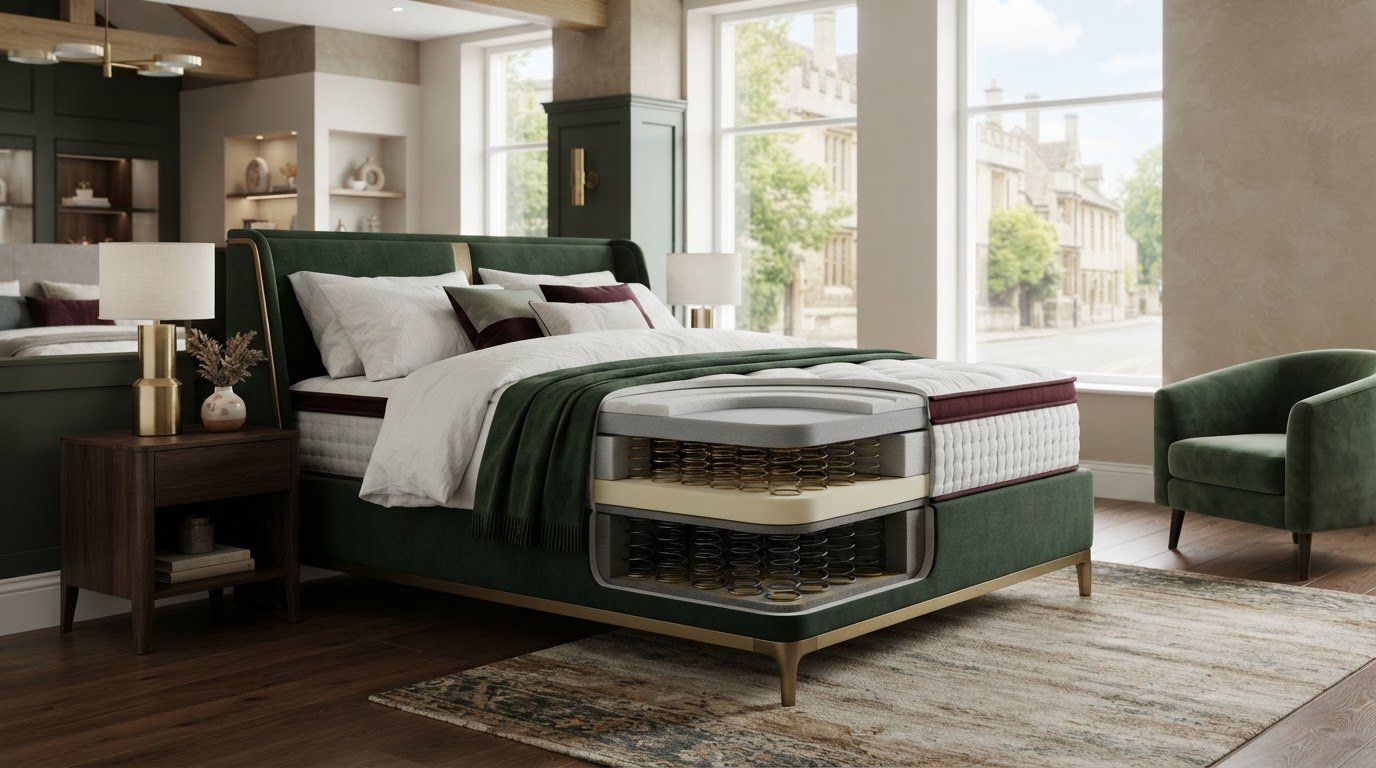
What does the Posturepedic label tell you about how a mattress will feel? It points to Sealy’s approach to support, but the construction and comfort of each mattress can differ. Sealy Posturepedic technology explained in plain English starts with looking beyond the name and comparing the details of individual models.
Technical terms and a range of models can make it hard to work out what’s supporting your body. The useful question is not just what a technology is called, but how the complete mattress feels to you. No label alone can promise a particular sleep experience or tell you which mattress is right for you.
In this guide, we’ll unpack the support idea behind Posturepedic, explain what the label can and can’t tell you, and outline which construction and comfort details to compare across Sealy models. You’ll also find practical ways to assess a mattress in person at our Cambridge showroom, or through its product information. When you’re weighing up your options, we use Klarna to provide interest free payments on amounts up to £1000, spread over 3 months.
Key Takeaways
- Sealy Posturepedic technology explained in plain English helps distinguish the support approach from the name used across the range.
- Compare a mattress’s support system separately from its comfort layers to understand how construction may shape its feel.
- Treat technology descriptions as design information, not a guarantee that a mattress will feel right for you.
- Use a model-by-model checklist to weigh stated feel, construction details and your practical preferences.
- If you’re in Cambridgeshire or East Anglia, trying Sealy mattresses at our Cambridge showroom can help you judge comfort beyond the product description.
What Is Sealy Posturepedic Technology? A Plain-English Explanation
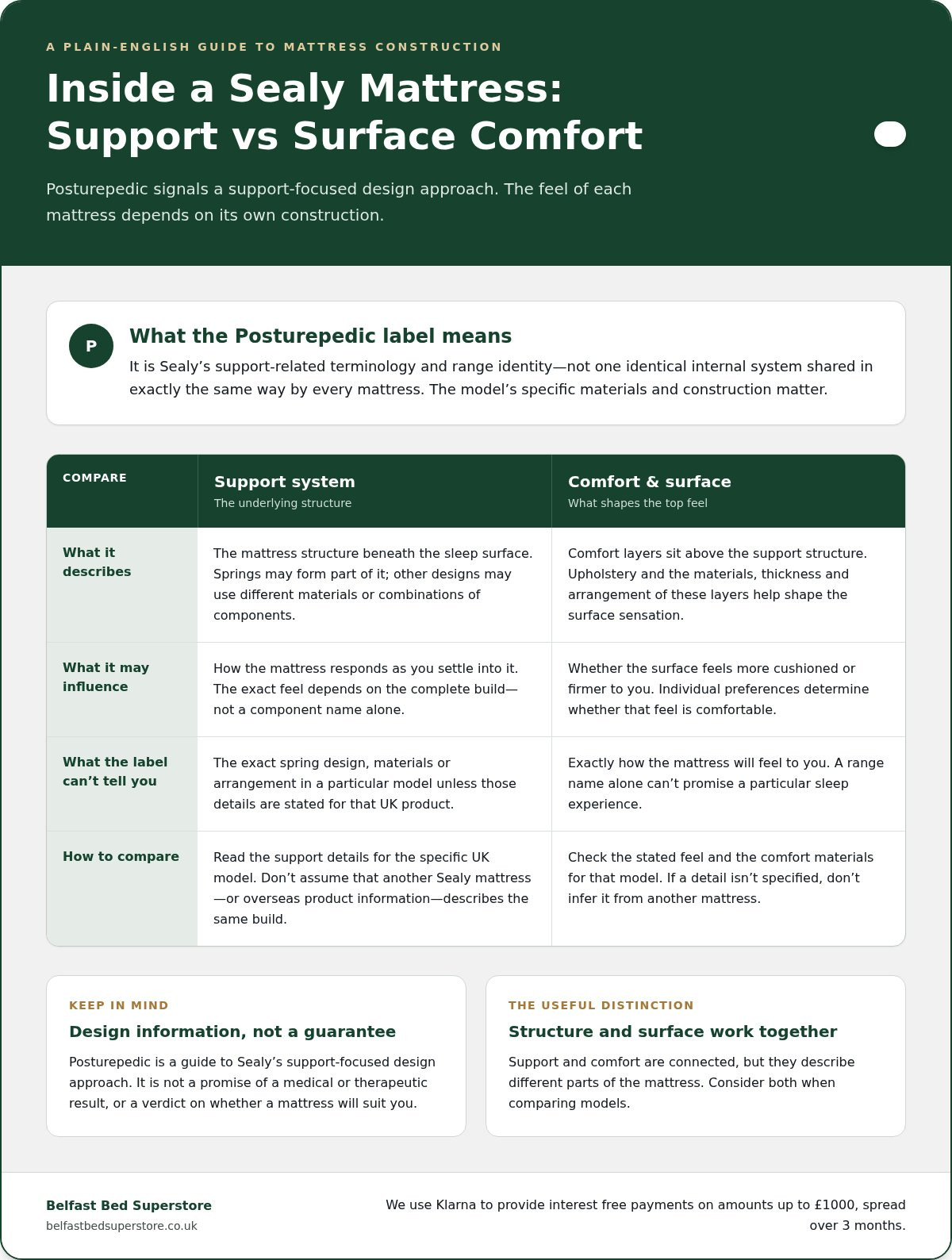
Sealy Posturepedic is Sealy’s name for a support-focused mattress design approach and range, not a single component shared in exactly the same way by every mattress. The label points to how a mattress is designed to support the body, while its specific construction and feel depend on the model.
That distinction makes Sealy Posturepedic technology explained in plain English easier to understand. The name is a useful starting point, but it can’t tell you everything about how a particular mattress will feel. Two mattresses with the same broad range name may differ in construction, comfort materials and stated feel. The product details for each model matter.
The word “Posturepedic” brings together ideas of posture and orthopaedics, but it shouldn’t be read as a promise of a medical or therapeutic result. A mattress description can tell you about its intended design; it can’t predict exactly how your body will respond or guarantee a particular outcome. Comfort is personal, so treat the label as a guide to the design approach, not a verdict on whether the mattress suits you.
What does the Posturepedic name refer to?
Posturepedic refers to Sealy’s support-related terminology for mattresses. Think of it as an umbrella description, not the name of one identical internal system. A specific model’s materials and construction determine what sits beneath the sleep surface and how the mattress is put together. For a little background on the name and brand, see the History of Sealy and Posturepedic.
Why do UK Sealy ranges use different descriptions?
Range names and feature descriptions help distinguish models, but the wording alone doesn’t explain every detail. Read product information model by model, using current UK descriptions rather than assuming that names or features shown in overseas material apply here. For an overview of Sealy mattresses, compare the product descriptions and stated features for each option.
This is especially helpful when a technical term appears in one description but not another. A difference in wording may reflect a difference between models, or simply the way their features are presented. Focus on what the UK product information says about the mattress you’re considering. Don’t fill gaps with assumptions based on a similarly named product in another market.
The Posturepedic label signals a support-focused design identity within Sealy’s mattress range. It doesn’t mean every mattress has the same build, provides the same sensation or will suit every sleeper. Read the model’s details as well as its range name, then use that information to guide a closer comparison. This distinction is the starting point for understanding how support systems and comfort layers work together in a specific mattress.
How Sealy Posturepedic Support Works Inside a Mattress
A mattress’s feel comes from more than one part. Beneath the surface, a support system forms the base; above it, comfort layers and upholstery shape the first impression when you lie down. Support describes the underlying structure, while comfort describes how the mattress feels at the surface. The two work together, but they’re not interchangeable.
This distinction is useful when reading product descriptions. A feature described as support-related doesn’t, by itself, tell you whether the top will feel firm, cushioned or responsive. Likewise, a soft surface doesn’t explain what support system sits underneath. Sealy mattress construction can vary by model, so don’t assume one description applies to the whole range.
What role do springs and support systems play?
The support system is the mattress’s underlying structure. In a spring mattress, springs form part of that structure; in other designs, support comes from different materials or a combination of components. The base contributes to how the mattress responds as you settle into it. Its exact feel depends on the complete build, not a component name alone.
Look for spring details only when they’re stated for the particular UK model you’re considering. Don’t assume every Sealy Posturepedic mattress uses the same spring design, arrangement or materials. Manufacturer information for other markets may not match a UK product. Sealy’s Posturepedic technology information can provide background, but use the UK model’s own product details for its specifications.
How do comfort layers affect the feel?
Comfort layers sit above the support structure and help shape the surface sensation. Their materials, thickness and arrangement can influence whether the top feels more cushioned or firmer to you. Upholstery also contributes to the overall feel. These elements vary between models, so a general range description can’t tell you exactly what’s inside a particular mattress.
For a practical comparison, divide each product description into two questions: what does it say about the support system, and what does it say about the surface and comfort materials? If the listing names a material or feature, treat that as information about that model only. If a detail isn’t specified, don’t infer it from another Sealy mattress.
That’s the useful takeaway from Sealy Posturepedic technology explained at component level: support and surface comfort are connected, but describe different parts of the experience. A clear description can help you understand the design; your own preference determines whether the feel suits you. You can browse Sealy mattress options and compare the details provided for each model before deciding which ones you’d like to assess more closely.
Posturepedic Technology: What It Means, and What It Does Not
A technology name can sound like a shortcut to choosing a mattress, but it can’t tell you exactly how the bed will feel. Posturepedic describes a support-focused design approach. It doesn’t mean every mattress in the range has the same construction, firmness or surface sensation. Mattress comfort depends on the whole model and the sleeper, not the technology label alone.
A product description may tell you what a mattress is designed to do or identify specific materials and components. That’s useful when comparing models. But the name itself doesn’t confirm how cushioned or firm the mattress will feel to you, or whether its construction matches your preferences.
Does Posturepedic mean every mattress feels firm?
No. The Posturepedic label alone doesn’t specify a mattress’s perceived firmness. Look for a stated tension or feel description in the individual model’s product information, where provided, and compare the wording across the options you’re considering. Treat it as a guide, not a guarantee: people can experience the same mattress differently.
For example, one shopper may describe a surface as gently cushioned, while another finds it firmer than expected. That doesn’t necessarily mean either person has misunderstood the product. The full construction and personal preference both shape the impression. Use the model’s own description and, where possible, assess how it feels to you rather than choosing from the range name alone.
There isn’t a universal firmness rule that can be reliably inferred from someone’s body type or a particular symptom. A label can’t replace your own assessment, and a general recommendation may not reflect your needs. Focus on what the product information says, then consider how the mattress feels in the sleeping position you usually use.
Can a support technology guarantee better sleep or relieve pain?
No mattress label can guarantee better sleep, treat a condition or promise pain relief. Support terminology describes a design intention, not a medical outcome. Your experience depends on many factors, including your comfort preferences, so a feature that sounds appealing on paper can’t predict whether you’ll find the mattress comfortable.
Keep the claims in proportion. If a product description identifies a support feature, use it as one point of comparison. It doesn’t establish that the mattress will prevent or resolve discomfort. If you have ongoing pain, a health condition or concerns about what sleeping surface is appropriate for you, speak with a qualified health professional rather than relying on a marketing term to guide medical decisions.
Understanding Sealy Posturepedic technology means recognising both the design information and its limits. The name can help you identify a support-focused range, but it can’t replace model-specific details or your own comfort judgement. Read the stated feel, look at the construction information and consider the complete mattress. This keeps comparisons practical and expectations realistic.
How to Compare Sealy Posturepedic Mattresses in Practice
A useful comparison starts with the details of each mattress, not just the word Posturepedic. Open the product descriptions side by side and note what they actually say. Recording the information in a short list makes differences easier to spot and helps you focus on features that matter to your preferences.
Use this checklist to compare specific models:
- Record the stated feel. Note any tension or comfort description given for each mattress. If the wording differs, treat that as a point to consider rather than assuming the models feel alike.
- Read the construction details. Check whether the listing describes a spring system, comfort layer or other component. Compare only details stated for that model; don’t assume a feature applies across the entire Posturepedic range.
- Separate support from surface feel. A support feature tells you something about the mattress design, while comfort materials and upholstery can influence how the surface feels. Consider both rather than relying on one technology term.
- Think about your everyday preferences. Does your current mattress feel too cushioned, too firm or about right? Use that experience as a starting point, while staying open to a different feel if you’re considering a change.
- Note any unspecified details. If a description leaves you unsure about a material or feature, don’t fill in the gap from another model’s listing. Keep your comparison grounded in the information provided.
How can you judge whether the feel suits you?
Product wording helps narrow your options, but it can’t fully reproduce the sensation of lying on a mattress. If you’re shopping in person, settle into a relaxed position you’d normally use for sleep. Notice your first impression, then give yourself time to decide whether the surface feels comfortable and supportive to you. There’s no need to choose by label alone.
Compare models in a consistent way. Use a similar position and give each mattress a fair chance, then note which one feels more comfortable and why. You might prefer a softer first impression, a steadier feel or something in between. These are personal observations, not universal rules, and they make the comparison more meaningful than a feature name on its own.
For Sealy Posturepedic technology explained in practical terms, connect each stated feature to the model it describes, then weigh that information against your own impression. The Sealy mattress range gives you a place to compare available options and their product details as you narrow your shortlist. Take your time: a considered comparison should leave you clearer about what you value, not pressured to select the mattress with the most technical-sounding description.
Explore Sealy Posturepedic Options with a Local Mattress Specialist
Once you understand what a technology description can tell you, the next step is to see how the details translate into a mattress’s feel. Product information can help you shortlist models, while trying a mattress in person lets you notice your own comfort preferences. You don’t have to decide from a name or feature list alone.
What can an in-person mattress assessment help you understand?
Lying on a mattress lets you experience its surface and overall feel directly. At our Cambridge showroom, you can settle into a natural sleeping position and notice whether the mattress feels comfortable to you. When comparing Sealy models, take your time with each one and notice what feels different rather than making a quick decision based on technical terms.
Think about what you’ve liked or disliked about your current mattress, then use that as a reference point. Read each model’s product information alongside your own impression. Does the stated construction help explain the sensation you notice? The aim isn’t to choose the feature with the most impressive name. It’s to find a particular mattress whose feel suits you.
For broader selection advice, a Sealy mattress buying guide can help you consider the choices. Pair that with model-specific product descriptions, since features can differ between mattresses. You can browse our Sealy mattress options as you decide which models you’d like to explore further.
What are sensible next steps after understanding the technology?
Start with a shortlist of models whose stated feel and construction appeal to you. If you’re in Cambridgeshire or East Anglia, a visit to our Cambridge showroom can help you compare those options in person. There’s no single mattress that suits everyone, so use the product details as a starting point and your own comfort as an important part of the decision.
We provide a 30-night sleep trial guarantee. Sealy Posturepedic technology explained in practical terms can make product descriptions easier to interpret, but choosing still means weighing those details against your preferences. If you’re shopping online, compare the information for each model; if you visit in person, take time to experience the feel for yourself.
When you’re ready, explore the Sealy mattress range and consider which option feels like the right next step for you.
Take the Next Step Towards a Mattress That Feels Right
Understanding Sealy Posturepedic technology explained gives you a clearer way to read mattress descriptions, but your own comfort is the deciding factor. Use the details as a guide, then compare the options that catch your eye. A thoughtful choice comes from matching the information with the feel you prefer, not from choosing the model with the most technical-sounding name.
As an independent, family-run retailer, we’re here to make exploring Sealy mattresses straightforward. You can browse online or visit our Cambridge showroom to experience mattress comfort in person. Take time to consider what feels comfortable and what suits your preferences.
Explore Sealy mattresses and find a feel that suits you. Your next step can be as simple as browsing a few options and seeing which one feels like a good fit.
Frequently Asked Questions
What is Sealy Posturepedic technology?
Sealy Posturepedic technology is Sealy’s support-related design approach and range terminology. For Sealy Posturepedic technology explained simply, think of the name as a starting clue, not a full list of what’s inside a mattress. When comparing two listings, note the model names and look for details about their construction and stated feel. This makes it easier to compare like with like instead of relying on the range label.
Is Sealy Posturepedic the same in the UK and the US?
Not necessarily; products and descriptions can differ between markets. A US page might refer to a collection name or feature that doesn’t appear in the UK range, so treat overseas information as general background rather than a specification for a British mattress. For example, if a US listing names a particular spring system, look for that detail in the UK description before assuming it applies to the model you’re considering.
Does Sealy Posturepedic mean a mattress is firm?
No, the word Posturepedic doesn’t establish whether an individual mattress will feel firm or soft. Check the model’s UK product description for a stated tension or feel, then use that as one guide when narrowing your options. If the description doesn’t give a clear indication, avoid guessing from the name. In Cambridgeshire and East Anglia, you can use product information to shortlist models before assessing them in person.
Can Sealy Posturepedic technology help with back pain?
A mattress technology label can’t promise pain relief or treat a medical condition. It describes a design approach, not an individual health outcome. When choosing a mattress, pay attention to the specific model’s details and whether its feel is comfortable for you, rather than interpreting a support term as medical advice. For ongoing pain or other health concerns, speak with a suitable health professional about your needs.
Are all Sealy Posturepedic mattresses made with the same springs?
Don’t assume every Sealy Posturepedic mattress has identical springs. Construction details can vary by model, so look for the exact spring-system description in the product information for the mattress you’re comparing. When making a shortlist, write down the model name beside any spring details given. That helps prevent features listed for one mattress from being mistakenly attributed to another.
How can I tell whether a Sealy mattress is a Posturepedic model?
Check the individual mattress’s current name and UK product description. A broad retailer category can group products for browsing, but the model listing is the more useful place to look for its range name and construction details. When viewing options online around Cambridgeshire or East Anglia, keep the exact model name with your notes so you can compare the same product information later.
Should I choose a mattress based on its technology name?
No, use the technology name as one consideration alongside the individual mattress’s stated feel and construction. For example, if two options carry similar range wording but describe different comfort materials, compare those details and decide which sounds closer to your preference. If you can try a mattress, notice how it feels in a natural sleeping position. Your own comfort is a more useful guide than a label alone.