
 Buy now, Pay later

Is a luxury mattress worth the investment compared with mid-range options?
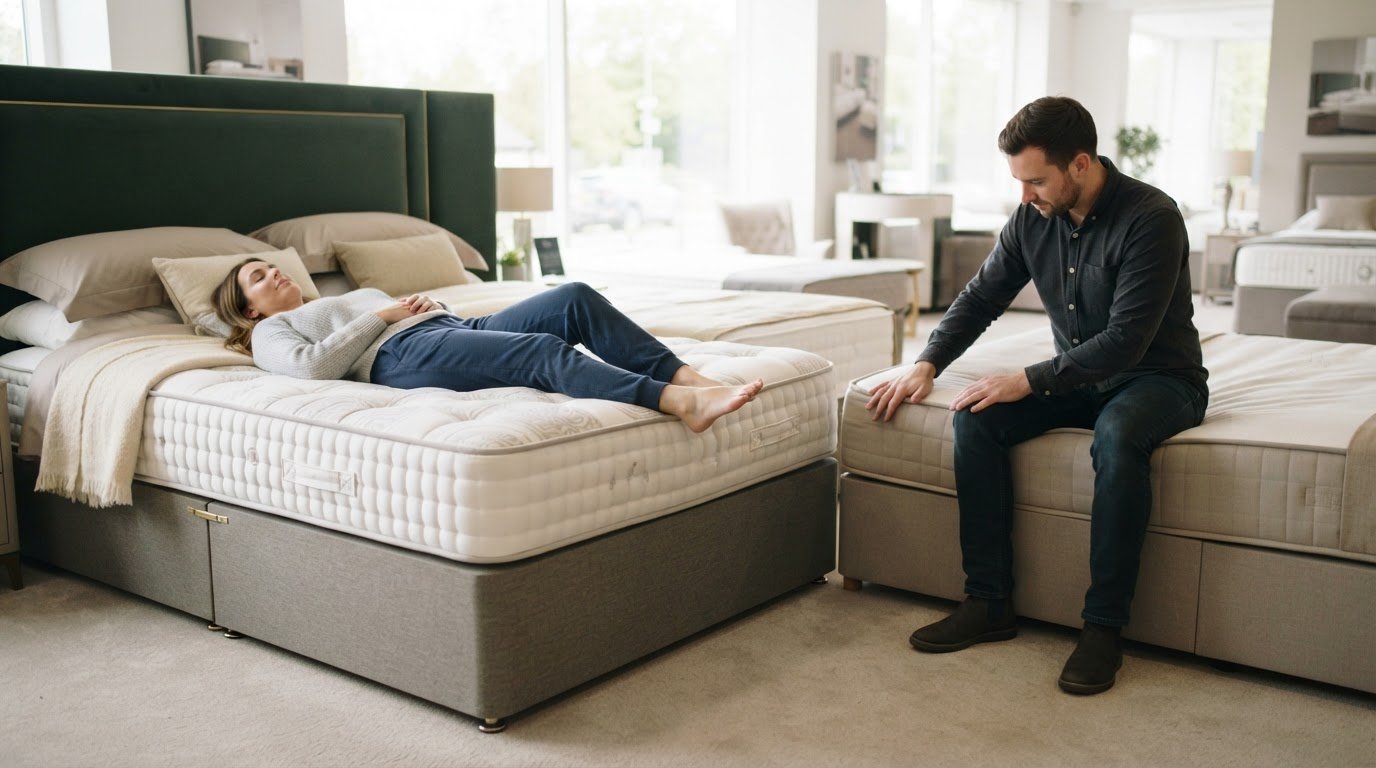
A higher price doesn’t automatically mean a better night’s sleep. Whether a luxury mattress is worth the investment depends on how its materials, support and feel suit you, not on its price tag alone. A well-made mid-range mattress may be enough if you already sleep comfortably.
It makes sense to expect more from a premium mattress, particularly in its construction, pressure relief and temperature comfort. But spending more is worthwhile only when those qualities match your needs and preferences.
This guide compares luxury and mid-range options, from natural fibres and spring systems to foam, comfort and temperature regulation. You’ll learn what to weigh up, how sleeping position and personal comfort shape the decision, and when a simpler mattress may offer better value.
Key Takeaways
- Judge value by the mattress’s support, pressure relief and comfort for your body, not by its price alone.
- Compare materials and construction to understand what a luxury mattress offers beyond a mid-range option.
- Consider your sleeping position and whether the mattress helps you stay comfortable without feeling too soft or too firm.
- Temperature comfort matters too: materials such as wool and breathable constructions can affect how warm the bed feels.
- We use Klarna to provide interest free payments on amounts up to £1000, spread over 3 months.
Are Luxury Mattresses Worth It?
A luxury mattress can feature carefully layered materials and construction, but a higher price alone doesn’t guarantee better rest. Whether it’s worth the investment depends on how well its support, firmness and pressure relief suit your body and sleeping position.
Compare the feel and practical terms as well as the materials. Each can affect comfort and durability, and whether the added benefits matter to you.
Comfort and Body Support
Comfort combines surface cushioning with support beneath it. A mattress should support spinal alignment without making you feel bowed or compressed. Side sleepers may benefit from pressure relief around the shoulders and hips, while back sleepers need cushioning without excessive sinking around the midsection.
Luxury construction may provide more carefully layered support, but the right firmness is personal. A soft surface can still feel supportive, while a firm one can still create pressure points. Focus on how your body feels across the mattress, not softness alone.
Warranties, Trials, and Returns
In the UK, compare the written warranty, sleep-trial terms and returns policy before buying. Check what the warranty covers, its duration, exclusions and available remedy. For a trial, check when it begins and whether return conditions or collection arrangements apply.
These terms are separate from a mattress’s comfort and construction: they describe the purchase conditions, not how well it will support you. A generous trial can make it easier to assess firmness at home, while clear exclusions help you understand the limits of warranty cover.
Risks of Luxury Mattress Buying
The main risk is paying for features that don’t match your needs. A plush top may feel inviting at first but still leave a side sleeper’s shoulders under pressure, or let a back sleeper’s midsection sink too far.
Luxury materials can’t guarantee better sleep or longer-lasting comfort. A mattress may be poor value for a guest room, short-term use or a household with other budget priorities. Consider longevity and durability alongside actual comfort and support.
| Mattress option | Typical feel to assess | Support and pressure-relief focus | Value consideration |
|---|---|---|---|
| Mid-range foam | Cushioned | Check for sinking and pressure around shoulders and hips | May suit sleepers already comfortable on foam |
| Luxury foam | Layered cushioning | Assess whether support stays balanced as you settle | Added materials matter only if they improve your fit |
| Mid-range pocket-sprung | Responsive | Notice how the surface supports your sleeping position | A practical comparison for spring-mattress preferences |
| Luxury hybrid | Mixed cushioning and spring response | Compare surface comfort with support underneath | Consider whether both elements benefit your sleep |
Use the table to narrow your options, then choose the firmness that supports your alignment without creating pressure or excessive sinking.
Sleep engineering is useful when it explains how layers and springs work together, rather than relying on a luxury label. Whether a luxury mattress is worth the investment comes down to a practical match: a clear comfort benefit, suitable support and construction that fits how you sleep.
Luxury mattress materials and construction
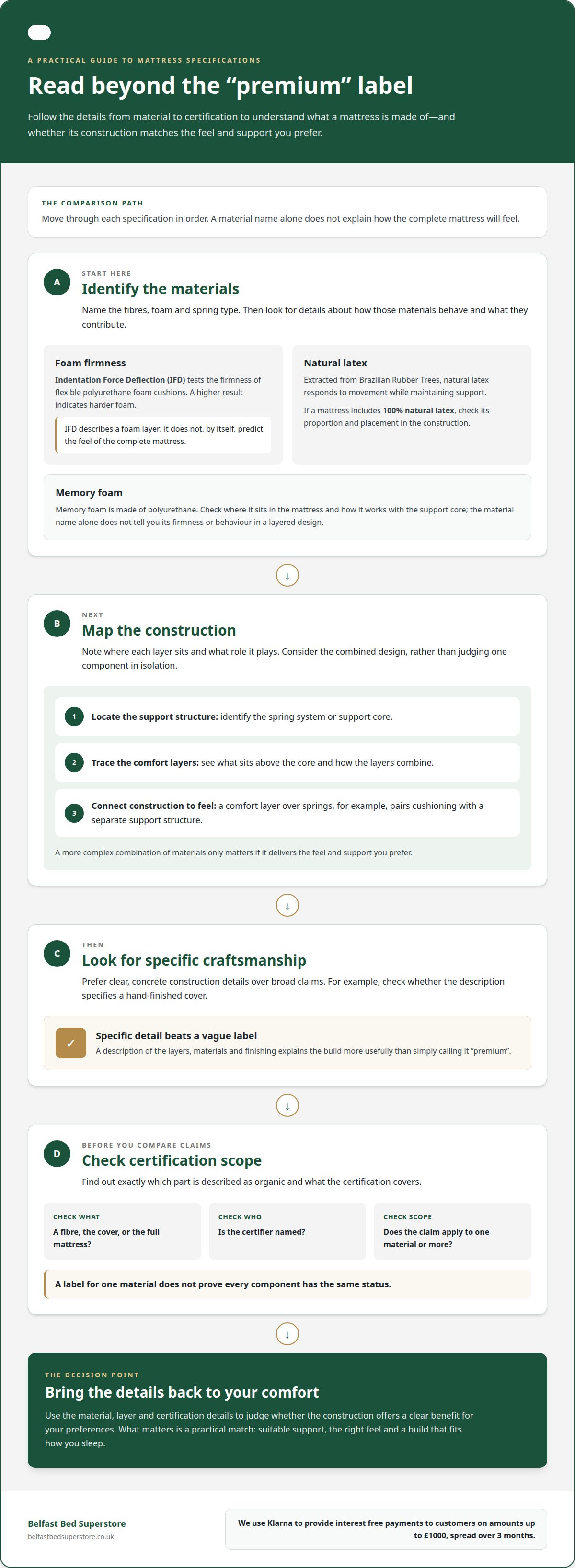
Premium construction can combine natural fibres, foam layers and engineered spring systems. These materials shape a mattress’s feel, responsiveness and airflow, but a luxury label alone doesn’t explain what’s inside. Look for a clear description of each layer, its material and its role in the finished mattress.
For example, a mattress may pair a spring core with cushioning layers and a hand-finished cover. That describes its construction more usefully than broad claims about craftsmanship. Spending more may buy a more complex combination of materials, but the benefit depends on whether it delivers the feel and support you prefer.
Foam descriptions can also provide useful detail. Indentation Force Deflection tests measure the firmness of flexible polyurethane foam cushions. A higher result indicates harder foam, helping explain a layer’s firmness. By itself, though, this doesn’t tell you how the complete mattress will feel: the other layers and spring system also affect its overall comfort.
Natural latex offers another point of comparison. It is extracted from Brazilian Rubber Trees, and natural latex responds to movement while maintaining support. That responsiveness may appeal if you want to change position without the mattress feeling slow to react. Some luxury mattresses incorporate 100% natural latex, but the proportion and placement within the mattress matter when you compare construction.
Memory foam is made of polyurethane, so the material name alone doesn’t tell you its firmness or how it behaves in a layered design. Look for details about where the foam sits and how it works with the support core. A comfort layer over springs, for instance, combines cushioning with a separate support structure.
Read claims about organic materials and certification carefully. Check which part is described as organic: a fibre, the cover or the full mattress. Then look for the certifier’s name and the scope of the certification. A label applied to one material doesn’t prove that every component has the same status.
Use this simple comparison when reading specifications:
- Material: identify the fibre, foam or spring type.
- Construction: note where each layer sits and what it contributes.
- Craftsmanship: look for specific details, such as a hand-finished cover.
- Certification: match each claim to the material and stated scope.
These details make material comparisons more practical than relying on the word “premium”. To connect construction details with your comfort preferences, explore mattress options and their materials.
Choosing a mattress to suit personal comfort preferences
Set your priorities before choosing between a mid-range model and a premium mattress. Decide whether comfort depends most on cushioning, responsive support, reduced motion transfer or a cooler surface. These priorities help distinguish useful features from extras that don’t change how the bed feels to you.
Budget matters, but price alone can’t identify the right comfort profile. Spending more won’t help if the mattress feels too firm, lets your body sink too far or leaves you waking because of heat. First focus on the sensation you want, then compare options that fit your budget and support those preferences.
Memory foam contours around the body, creating a close, cushioned feel. That same contact can retain body heat for some sleepers, so consider the whole design rather than the foam label alone. A memory foam layer combined with a breathable cover, for example, feels different from a thick, close-fitting foam surface.
Cooling features can affect how comfortable the bed feels through the night. Breathable materials, natural latex and cooling technologies can help improve airflow and temperature comfort. Check where those materials sit: a breathable cover affects the surface, while the layers beneath also shape how heat moves through the bed.
Consider movement as well as temperature. Couples may need a mattress that limits motion transfer while remaining responsive. A heavily cushioned surface can feel settled and snug, while a more responsive construction can make changing position easier. The right balance depends on whether you value stillness, ease of movement or both.
Use these practical checks to narrow your choices:
- Write down your priorities: choose comfort, cooling, movement or a combination.
- Match the feel: consider whether memory foam’s close contouring suits your sleeping preferences.
- Review cooling features: identify the breathable materials or technologies used.
- Consider shared sleep: weigh motion transfer against the responsiveness you prefer.
Compare each mattress against the same priorities. If a close foam feel appeals to you but warmth disrupts your nights, give airflow features greater weight. If you share a bed, prioritise the balance between motion control and ease of movement instead of choosing by softness alone.
Personal comfort is the deciding measure, not the word “premium”. A luxury option deserves consideration when its specific features address your sleeping preferences. If a simpler construction already provides the feel and temperature comfort you need, paying for extra layers may add little practical value.
Temperature regulation
Temperature comfort depends on the materials touching your body and the layers beneath them. A premium mattress may combine breathable materials, natural latex or cooling technologies, but the word “luxury” doesn’t guarantee a cooler sleep. Compare the actual construction rather than relying on broad comfort claims.
Wool is described as helping regulate temperature in both cold and warm climates. Its role in a mattress depends on where it sits and how it works with other layers. For example, wool in a cover affects the surface feel, while the rest of the construction also shapes airflow and cushioning.
Breathable materials can help improve airflow and temperature comfort. Natural latex and cooling technologies can also contribute. These features matter most when they address your experience of sleeping warm. Check whether the mattress description explains the material and its position, rather than treating “cooling” as a complete explanation.
Luxury and regular mattresses can differ in the number and type of layers. Some luxury designs use natural fibres, advanced foams and engineered spring systems. A simpler mattress may use fewer materials or a more straightforward construction. Neither design is automatically cooler: the combination and placement of materials matter more than the category name.
Assess temperature regulation alongside support and pressure points. A surface that feels cool at first may still be uncomfortable if it creates pressure around your shoulders or hips. Likewise, a mattress that cushions pressure points may not meet your needs if its materials hold too much warmth. Consider both needs together, not as separate buying decisions.
Use these steps to compare options without relying on vague claims:
- Identify the layers: note the cover, comfort materials and support structure.
- Find the cooling feature: look for named materials, such as wool or natural latex.
- Check its position: distinguish a surface layer from materials deeper inside.
- Balance comfort: consider airflow alongside pressure relief and support.
This comparison helps clarify whether advanced construction offers a practical temperature benefit for you. If a regular mattress already feels comfortable through the night, a premium design may add little in this respect. If warmth is a recurring concern, prioritise a clear explanation of materials and layers over the label or price.
A well-made mid-range mattress may be sufficient if you sleep comfortably and have no recurring issues with pressure relief, support or temperature regulation. This range offers a reference point when comparing options, but it doesn’t establish whether a particular mattress suits your needs.
A mattress may perform better when paired with a suitable base, quality pillows and breathable bedding. Consider your whole sleep setup when assessing warmth, rather than attributing every difference to mattress materials alone. If your current arrangement feels comfortable, ask whether a change would address a recurring concern. A clear reason for upgrading is more useful than assuming that a higher price or more elaborate construction will improve temperature comfort.
Comparing luxury and mid-range mattresses
Compare likely lifespan, comfort and construction rather than treating a higher price as proof of better value. The best purchase is the one that suits your needs and remains comfortable over time.
Luxury and Cheaper Mattress Lifespan
Mattress lifespan varies with construction, care and use. Lower-end mattresses may need replacing after five to seven years, while people replace mattresses on average every six to eight years. High-quality mattresses can last up to 20 years with proper care, and a high-end luxury mattress could potentially last more than 30 years.
These figures describe different expectations, not a lifespan promised for every mattress. Consider whether the design is likely to maintain its structure and comfort, and how often the bed will be used. A longer-lasting, more expensive mattress is an advantage only if it continues to suit your comfort needs.
Cost Per Year of Ownership
Work out cost per year by dividing the purchase price by the years you expect to use the mattress. This compares upfront spending with useful life, but the result depends on the actual price and how long the mattress stays comfortable.
A cheaper mattress can cost less initially, while a longer-lasting option may spread its cost over more years. Don’t assume luxury always wins this calculation: durability, comfort and replacement timing all affect value.
Value Across Mattress Types
No type offers the best value for every sleeper. Pocket-sprung designs provide a spring-based feel; memory foam contours closely; latex responds to movement while maintaining support; and hybrids combine materials such as foam and springs.
Compare each type against the qualities you need, including pressure relief, responsiveness and temperature comfort. A foam mattress may suit someone who prefers close cushioning, while latex may appeal to someone wanting a quicker response. Value comes from the fit, not the category name.
Budget, Mid-Range, and Luxury Costs
There isn’t one fixed UK price for budget, mid-range and luxury mattresses. Prices vary with size, materials, construction and brand, so compare like with like rather than relying on a category label.
That review range doesn’t set universal budget or luxury thresholds. For your comparison, assess the listed construction and expected comfort alongside the price, then consider likely years of use.
To choose, first identify the feel and support you need, then compare construction, expected durability and purchase cost. Choose the more expensive mattress only when its specific benefits justify the extra spending for your situation.
Belfast Bed Superstore: Mattress Protectors
For mattress shoppers in Cambridgeshire and East Anglia, Belfast Bed Superstore offers Mattress Protectors alongside Hypnos, Sealy and Relyon Mattresses. A protector may help keep your mattress in good condition.
We use Klarna to provide interest free payments on amounts up to £1000, spread over 3 months. This can be another consideration when weighing your purchase alongside comfort, materials and expected durability.
For help considering mattress protectors or these mattress options, contact Belfast Bed Superstore.
Choose the mattress that feels right for you
Make your next step practical: focus on the feel you want night after night. A label or price can’t make that decision for you. Whether a luxury mattress is worth the investment comes down to how well its comfort and construction fit your priorities, alongside the value you place on those features.
Belfast Bed Superstore offers Hypnos, Sealy and Relyon Mattresses, giving you several established names to consider as you narrow your choice. Think about the support and comfort you’re seeking, then explore options that match those preferences. The right choice makes sense for your sleep and budget.
If you’d like help with your next step, contact Belfast Bed Superstore. Take your time, trust what feels comfortable, and choose with confidence.
Frequently Asked Questions
How much should you spend on a mattress?
Choose a mattress within your budget that meets your comfort needs, rather than aiming for a particular price bracket. First decide what matters most, such as cushioning, support or a cooler feel. Then compare mattresses of the same size and type, looking at construction and purchase terms. If a less expensive option meets those priorities, paying more may not add meaningful value.
What is the average price of a luxury mattress in the UK?
There isn’t one useful average price for every luxury mattress in the UK. The price depends on factors such as size, materials, construction and brand, so a figure for one category can hide important differences. For a fair comparison, look at mattresses of the same size and compare what their layers and support systems offer. Judge the price against those features, not the luxury label alone.
What features distinguish a luxury mattress from a standard mattress?
Luxury mattresses may use natural fibres, advanced foams, engineered spring systems or hand-finished covers. The combination varies by design, so the label itself doesn’t tell you what a particular mattress contains. Check the product description for specific materials and how the layers are arranged. A detailed specification can help you understand what you’re paying for, but it doesn’t guarantee a better fit for your preferences.
Do expensive mattresses improve sleep quality or reduce back pain?
An expensive mattress doesn’t guarantee better sleep or less back pain. Support and comfort depend on how well the mattress suits your body and sleeping position. For example, pressure relief around the shoulders and hips may matter to a side sleeper, while another person may need a different feel. Consider whether the mattress supports comfortable alignment. Price alone can’t establish that it will relieve pain or improve sleep.
Are luxury mattresses worth the investment according to independent UK reviews?
Independent UK reviews can help identify well-regarded mattresses, but they don’t show that every luxury model is worthwhile for every buyer. Telegraph Recommended’s experts have tested and approved mattresses across different price points. Treat a recommendation as a starting point, then consider whether the model’s comfort and construction suit your needs. Reviews can guide your shortlist, but personal fit remains central to value.