
 Buy now, Pay later

How Your Mattress Affects Sleep Quality and Mood
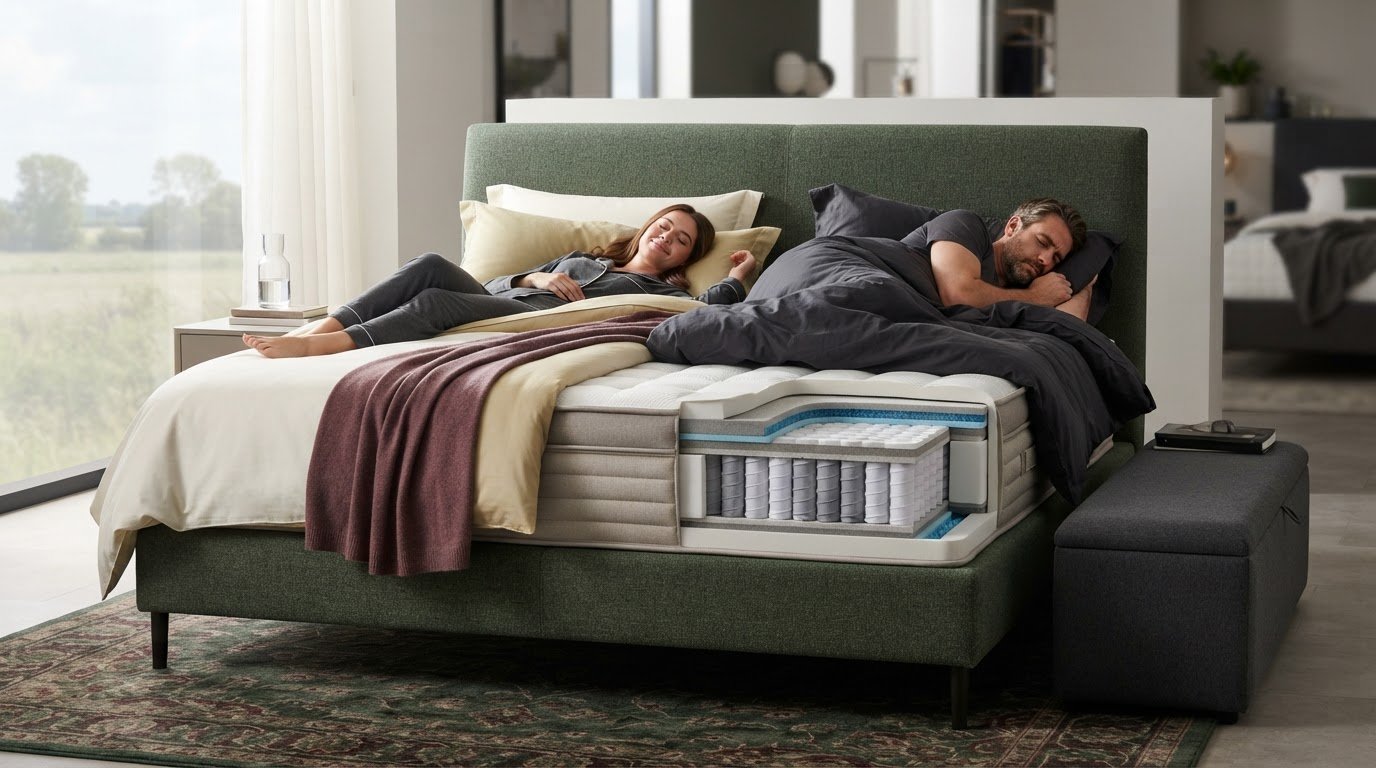
A mattress can do more than feel uncomfortable: how your mattress affects sleep quality depends on whether it supports your body, eases pressure and helps you stay at a comfortable temperature. A sagging or poorly matched mattress can contribute to aches and broken sleep, leaving you drained or low, though it does not prove a health condition on its own.
If you wake often, feel stiff in the morning or struggle to settle, your mattress may be part of the picture. This guide explains how support, sleeping position, materials and temperature can influence rest, health and mood. You’ll also learn what to consider when comparing memory foam, hybrid, gel-infused foam and latex mattresses, and how to spot signs that your current sleep surface may no longer suit you.
Key Takeaways
- Choose support that suits your sleeping position and helps keep your spine comfortable, rather than relying on firmness alone.
- Heat build-up and limited airflow can disturb rest, so consider how mattress and bedding materials feel through the night.
- Notice patterns such as waking stiff, restless or unrefreshed; they may help you assess whether your mattress still suits you.
- Memory foam, hybrid, gel-infused foam and latex each offer different feels and temperature characteristics to consider.
- Comfort and support work together: the right sleep surface can reduce pressure and make it easier to settle and stay asleep.
Choosing a mattress for sleep position and support
Understanding how your mattress affects sleep quality starts with noticing how your body feels in your usual sleeping position. If a partner’s movements disturb you, pocket-spring mattresses can reduce noise and motion transfer, helping limit disruption when one person moves.
Matching Support to Sleep Position
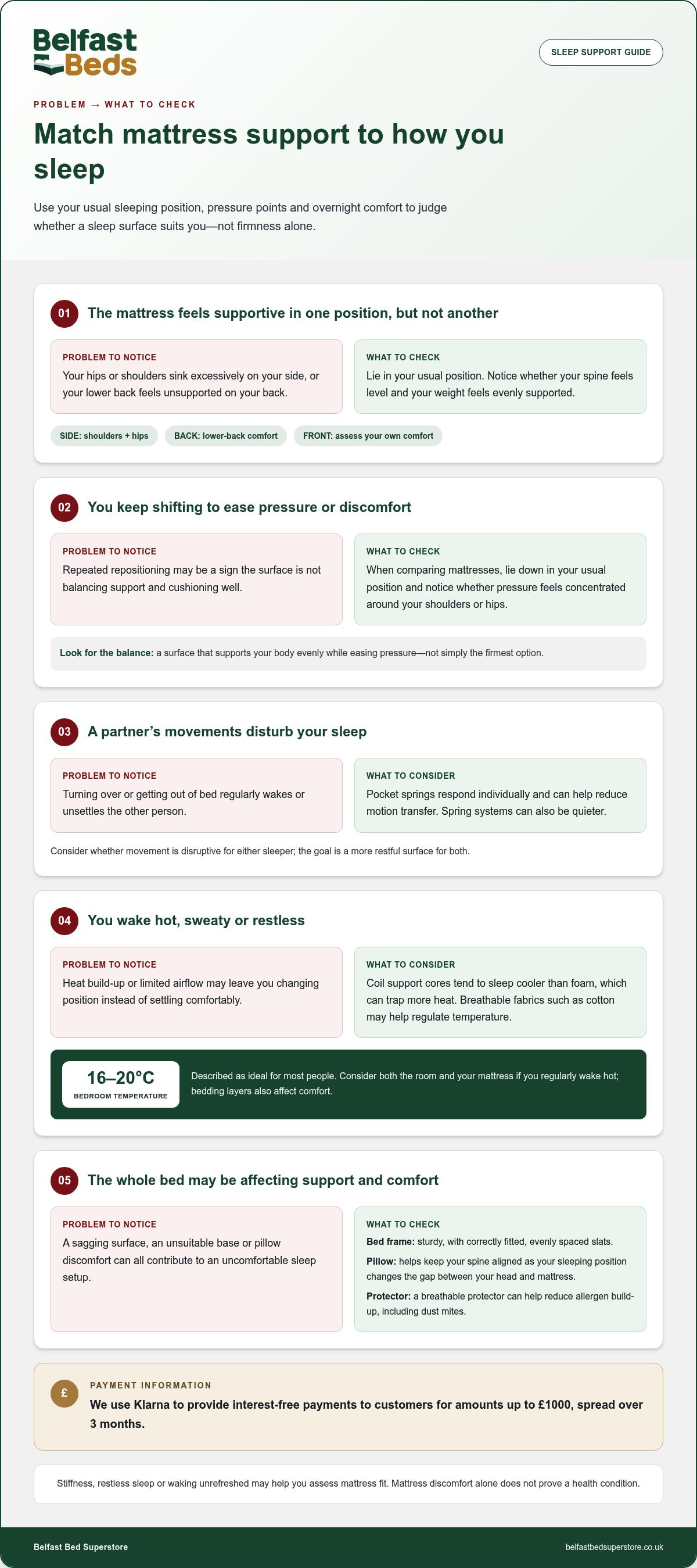
Matching support to your sleeping position means choosing a surface that responds well to how you lie, whether on your side, back or front. A mattress can feel supportive in one position but uncomfortable in another. For example, notice whether your hips or shoulders sink excessively when you lie on your side, or whether your lower back feels unsupported when you lie on your back.
Spinal Alignment and Pressure Relief
Spinal alignment means resting in a naturally supported position, while pressure relief limits concentrated force on areas such as the shoulders and hips. Both matter because a mattress that sags or distributes weight unevenly can strain the body and create pressure points. If you keep shifting to ease discomfort, the sleep surface may not balance support and cushioning well.
Support, Back Pain, and Sleep Quality
Mattress support relates to back pain when the sleep surface fails to support the body evenly through the night. A mattress that no longer provides adequate support or pressure relief may make falling asleep harder and contribute to repeated waking. For someone already experiencing aches, open-coil or pocket-spring mattresses are options to consider. Judge comfort by how your body feels while lying down.
To assess how your mattress affects sleep quality, compare it with your usual position and the discomfort you notice. Lie in that position on each mattress you’re considering, then check whether your spine feels level and your weight evenly supported. Side sleepers can focus on pressure around the shoulders and hips; back sleepers can notice whether the lower back feels strained. These checks help you judge fit instead of relying on firmness alone.
Partner movement is another factor. Pocket springs respond individually, which can help reduce motion transfer, and spring systems can also be quieter. If one partner regularly turns or gets out of bed, consider whether those movements disturb the other person. The aim is a more restful surface for both, not simply the firmest mattress available.
Look beyond the mattress, too. A sturdy frame with correctly fitted, evenly spaced slats helps support comfort and mattress longevity. Supportive pillows can help keep the spine aligned and reduce aches, particularly when your sleeping position changes the gap between your head and mattress. A mattress protector may also help reduce allergen build-up, including dust mites.
Sleep can feel more restorative when your mattress suits your position, eases pressure and limits disruptive motion. If your current mattress sags, leaves you uncomfortable or prompts repeated tossing and turning, note those details. They can help you identify what your next sleep surface needs to do differently.
Can a Bad Mattress Cause Health Problems?
A mattress can affect comfort through heat, airflow and moisture management. If overheating or irritation repeatedly interrupts sleep, the resulting poor rest may leave you feeling less refreshed during the day.
Airflow and Temperature Regulation
Mattress airflow is the movement of air through or around its materials, which can help disperse warmth and moisture. It matters because trapped heat may leave you waking sweaty, changing position or tossing and turning instead of settling into restful sleep.
Coil support cores tend to sleep cooler than foam mattresses, which can trap more heat. A spring mattress can also promote airflow, while breathable fabrics such as cotton may help regulate temperature. Your duvet and other bedding matter too, so adjust the layers if you feel too warm or cold.
A bedroom temperature between 16°C and 20°C is described as ideal for most people. This gives you a practical starting point: consider both the room and the mattress if you regularly wake hot. A slightly cool room, paired with bedding that feels comfortable, can help avoid temperature becoming a source of disturbance.
Airflow and Allergens
Airflow describes how readily air moves around a mattress and can affect how moisture behaves near the sleep surface. Spring mattresses may promote airflow that helps deter moisture, mould and dust mites. Air movement is not the only consideration, however: the mattress, room and bedding all contribute to the sleep environment.
To manage allergen build-up, use a breathable mattress protector as a barrier and vacuum the mattress periodically. A machine-washable protector can also help manage allergens. These steps focus on the surface and its care, while ventilation beneath the mattress supports a drier environment.
A bed base that leaves room for air to move beneath the mattress can help protect against mould and mildew. If the mattress sits close to a solid surface, for example, airflow underneath may be limited. Consider the base as well as the mattress for a fuller picture of moisture management.
Heat Retention
Heat retention is the warmth held within a mattress, especially when its materials restrict airflow. It matters if you wake hot, feel clammy or repeatedly change position to find a cooler patch. Coil cores generally sleep cooler than foam, which can hold more heat, though bedding and room conditions also shape comfort.
Notice when the problem occurs. If you feel hot soon after getting into bed, consider the mattress and duvet; if the room feels stuffy, adjust ventilation and temperature too. Breathable cotton can help regulate temperature, while a slightly cool bedroom may make it easier to stay comfortable through the night.
Poor sleep has been connected to memory and concentration problems, weakened immune system functioning, obesity, high blood pressure, diabetes and cardiovascular disease. That connection does not mean an overheated mattress causes these conditions. It does underline why persistent sleep disruption deserves attention, alongside other aspects of your sleep environment.
Signs a mattress may be affecting sleep and mood
In the UK, mattress prices depend on materials, construction, size and support features, so there is no single price that fits every mattress. Compare what each design offers, such as its comfort layers and support system, rather than judging cost alone.
Warning Signs of a Bad Mattress
Warning signs include recurring sleep problems or physical discomfort that coincide with using your current mattress. They matter because restless nights can affect how alert and refreshed you feel during the day. Notice whether you wake with aches and pains, take longer to fall asleep, or feel mentally sluggish after seven or eight hours in bed.
Look for a pattern, not just one difficult night. Note whether you wake stiff after sleeping in the same place, for example, or sleep more comfortably elsewhere. A short sleep diary can help you compare bedtime, waking, comfort and mood over several nights. It won’t prove the mattress is the only cause, but it can make changes easier to spot.
Sleep disruption and mental health can influence each other. Poor sleep has been connected to memory and concentration problems, while low mood can make everyday tasks feel harder. If you regularly wake drained despite allowing enough time for sleep, consider the mattress alongside room temperature, noise and your bedtime routine.
Pay attention to how you feel during the day, too. Needing extra rest after a night of tossing and turning, or finding it harder to focus after repeated waking, gives useful context. The mattress becomes a more plausible contributor when discomfort and disrupted nights consistently occur together.
Signs a Mattress Needs Replacing
A mattress may need replacing when visible wear or lost support repeatedly affects your comfort. Most mattresses last about 7 to 10 years on average, but condition matters more than age alone. If yours is within that range and has developed a dip where you sleep, or feels uneven beneath you, assess whether it still supports restful sleep.
A mattress more than 6 to 8 years old may be worth replacing to help ensure proper spinal alignment and restorative sleep. These age ranges are guides, not automatic deadlines. A newer mattress with sagging can be less comfortable than an older one that still feels supportive, so combine its age with what you notice each morning.
A topper can change the feel or firmness of a sleep surface, but it can’t fix a sagging mattress. If a dip remains obvious beneath the topper, or you still wake with discomfort, changing the surface layer may not address the underlying support problem.
Compare your sleep and mood with the mattress’s condition: note its age, any sagging, repeated waking and morning aches. That simple record can help you decide whether the mattress remains comfortable or has become a regular source of disrupted rest.
Memory foam, hybrid, gel-infused foam and latex mattresses
Memory foam, hybrid, gel-infused foam and latex describe different mattress constructions or materials. Each can feel different under your body, so compare pressure relief, support, temperature and ease of movement. A material label alone doesn’t tell you whether a mattress will feel comfortable; the balance of its layers and your sleeping position matter too.
Memory foam moulds around the body, creating a close, cushioned feel. That contouring can suit someone who prefers a surface that responds closely to pressure points. It can also make turning feel less immediate than on a more responsive surface. Because foam mattresses can trap more heat than coil-core designs, consider whether you tend to wake warm before choosing this feel.
Gel-infused foam adds a gel layer or component to a foam mattress. Cooling gel layers are designed to help keep sleep comfortable and undisturbed, while open-cell foams can also support airflow. These terms describe design approaches, not a promise that every sleeper will feel cool. Compare the full mattress feel, especially if heat has previously made it harder to fall asleep.
Hybrid mattresses combine a spring support core with comfort layers, such as foam. This construction brings together spring support and a cushioned surface, though the feel depends on the layers used. A hybrid with a thicker foam comfort layer, for example, may feel more contouring than one with a more responsive top. Consider the materials as a whole rather than relying on the word “hybrid”.
Latex mattresses use latex in their comfort or support layers. Their feel differs from memory foam’s close hug, so notice how easily you can shift position and settle again. Latex is also used in pillows, where the height and feel should work with your mattress and sleeping position. Don’t assume every latex mattress has the same firmness or construction.
- Choose memory foam if you like a closer, pressure-responsive feel.
- Compare gel-infused or open-cell foam if heat retention concerns you.
- Consider a hybrid if you want springs beneath cushioned comfort layers.
- Try latex if you prefer a different response from contouring foam.
For a practical comparison, lie in your usual sleeping position on each type. Notice pressure at your shoulders and hips, how easily you can turn, and whether the surface feels too warm. A mattress that helps you settle and stay comfortable can support more restful sleep, while an uncomfortable fit can make it harder to feel at ease at bedtime.
How does mattress comfort and support affect sleep quality?
Comfort and support work together: comfort describes how a mattress feels, while support describes how it holds your body. A surface can feel soft at first but still leave you uncomfortable after lying in one position. If you wake with pressure around your shoulder, for example, consider how the mattress responds beneath that area.
Pressure relief and even weight distribution can help limit the urge to keep shifting. When a surface creates pressure points, tossing and turning may interrupt the transition into restful sleep. The effect is personal: a side sleeper may notice pressure at the shoulder and hip, while someone sleeping on their back may focus on whether their lower back feels strained.
Support matters throughout the night, not only in the first few minutes. A mattress that dips beneath your body can make it harder to find a comfortable position and may contribute to repeated waking. Lie in your usual sleeping position and notice whether your body feels evenly supported. A comfortable fit should let you settle without continually adjusting to ease discomfort.
Materials can influence that balance. Breathable fabrics, cooling gel layers and open-cell foams are designed to help keep sleep comfortable and undisturbed. If you tend to feel too warm, compare these features alongside the mattress’s support and surface feel. A cooling layer may address warmth, but it won’t make an uncomfortable or poorly supportive mattress the right fit.
- Notice pressure: identify whether your shoulder, hip or back feels uncomfortable in your usual position.
- Check movement: see whether turning feels easy or leaves you struggling to settle again.
- Assess temperature: note whether you feel too warm on the mattress, even with suitable bedding.
- Look for a pattern: compare how you feel after different nights, rather than judging from one bedtime.
These observations help distinguish surface comfort from support. A mattress may feel pleasantly cushioned but still let your hips sink more than feels comfortable. Another may feel supportive but too firm around your shoulders. Both examples show why choosing by firmness alone can miss the details that shape your rest.
A mattress that suits your body can make it easier to settle and remain comfortable, while repeated pressure or heat can disturb sleep. Compare mattresses for comfort and support with your sleeping position and the sensations you want to address.
Belfast Bed Superstore: Hypnos Mattresses
Belfast Bed Superstore offers Hypnos Mattresses, alongside Sealy, Relyon and Dunlopillo mattresses. If you’re comparing comfort, support or materials, explore these ranges as you consider what feels right for your sleeping position and temperature preferences.
We use Klarna to provide interest free payments to customers for amounts up to £1000, spread over 3 months.
If your mattress leaves you waking uncomfortable or unrested, use the features you’ve identified in this guide as a starting point for comparing options. You can contact Belfast Bed Superstore to discuss your mattress needs and explore its range.
Make your next night a more considered choice
Your sleep notes can turn a vague sense of discomfort into a clearer idea of what you need. Think about the feel you prefer, the positions you sleep in and what tends to disturb your rest. Understanding how your mattress affects sleep quality gives you a practical starting point for choosing a sleep surface that fits your needs.
Belfast Bed Superstore offers Hypnos Mattresses, Sealy Mattresses and Relyon Mattresses, giving you options to explore as you compare comfort and support. A thoughtful choice means finding a mattress that feels right for you, not chasing a one-size-fits-all answer.
If you’re ready to consider your next step, contact Belfast Bed Superstore today. A more comfortable night starts with choosing what suits you.
Frequently Asked Questions
What mattress firmness is best for different sleeping positions and body weights?
There isn’t one firmness that suits every sleeping position or body weight. Your weight affects how deeply you sink, while your position changes where pressure builds. If you sleep on your side, notice whether your shoulder and hip feel compressed; on your back, check whether your lower back feels supported. Try a mattress in your usual position and judge how your body feels rather than choosing by a firmness label alone.
Can an old or sagging mattress cause back pain and poor sleep?
Yes, a sagging mattress can contribute to discomfort and interrupted sleep by failing to support your body evenly. A visible dip beneath your hips, for example, may leave you waking stiff or shifting repeatedly overnight. Compare how you feel after sleeping in different places, and inspect the mattress surface and base for unevenness. Back pain can have other causes too, so persistent or worsening pain deserves attention beyond changing your sleep surface.
Do mattress materials such as memory foam, latex and pocket springs affect sleep differently?
Yes, materials create different feels and temperature experiences. Memory foam contours closely, which may suit someone who likes cushioning around pressure points. Pocket springs respond individually and can reduce motion transfer between partners. Foam may retain more heat, while coil cores tend to sleep cooler. Latex also feels different from close-contouring foam, so compare how easily you can change position and settle on each surface.
Can a mattress retain heat and cause night-time waking?
Yes, materials that restrict airflow can hold warmth and contribute to waking hot or sweaty. Foam mattresses can trap more heat than mattresses with coil support cores. If you wake warm, consider whether the mattress, duvet or room may be contributing. A breathable cotton layer and a slightly cool bedroom can help manage temperature. Adjust your bedding and notice whether waking improves rather than assuming the mattress is the only factor.
Can the wrong mattress worsen allergies, asthma or dust mite symptoms?
A mattress can contribute to allergen build-up, including dust mites, but that doesn’t establish the cause of allergy or asthma symptoms. A breathable mattress protector can act as a barrier, and vacuuming the mattress periodically may help manage dust mites. Keep the sleep surface and surrounding bedding clean, and notice whether symptoms change in different rooms. For ongoing breathing or allergy symptoms, speak with a healthcare professional.
How can you tell if your mattress is affecting your sleep?
Look for a recurring pattern between nights in bed and how you feel after waking. Examples include waking with aches, struggling to settle, turning often, or feeling drained despite allowing enough time for sleep. Note the mattress’s visible condition alongside your sleep and mood for several nights. If discomfort and poor rest repeatedly occur together, the mattress may be one factor to consider, alongside room conditions and bedtime habits.