
 Buy now, Pay later

How Much Should I Spend on a Good Mattress? A Practical UK Buying Guide
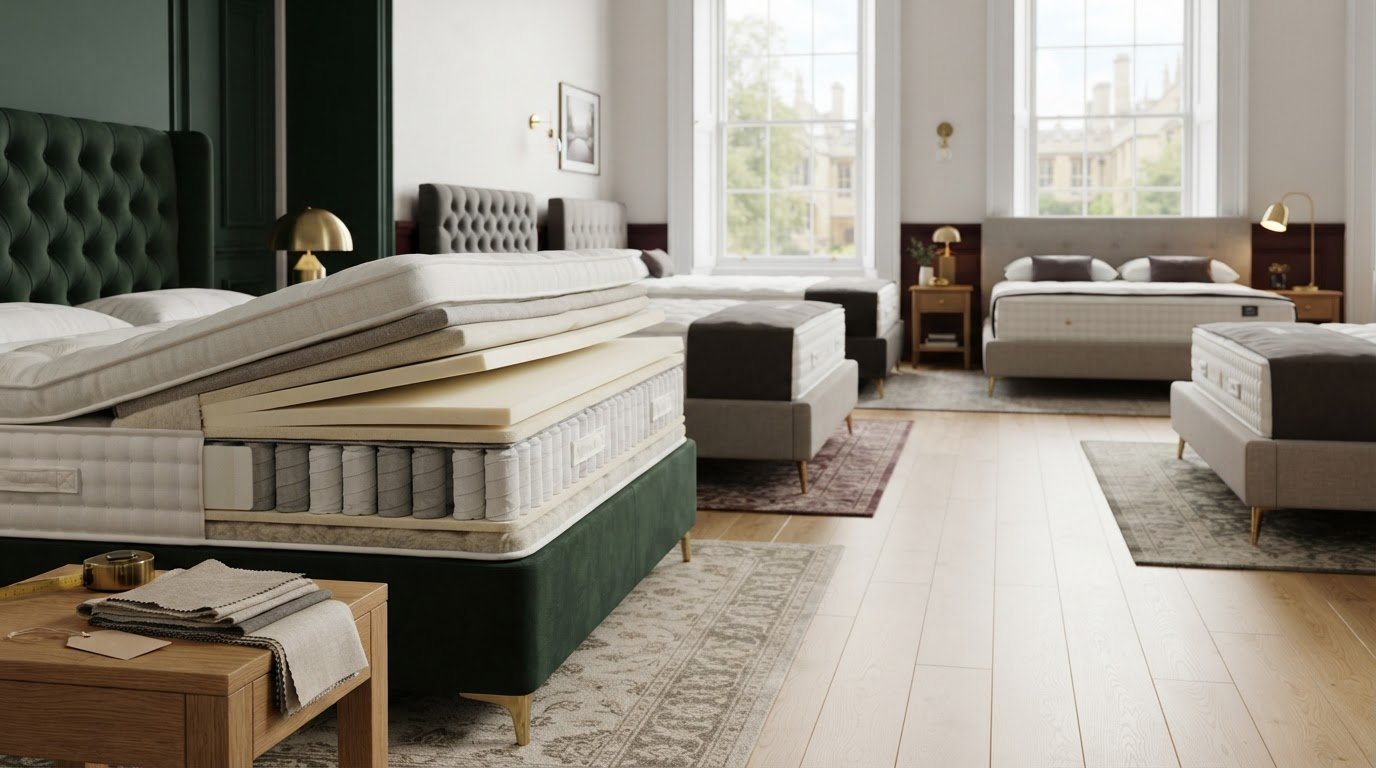
What if a better night’s sleep doesn’t mean buying the most expensive mattress on display? If you’re wondering how much should I spend on a good mattress, it’s easy to feel pulled between confusing price bands, technical claims and the worry of getting it wrong. The right budget depends on what you need from your mattress, how it’s made and how comfortable it feels to you, not just the label or the number of features.
This guide will help you set a sensible budget, understand which materials and construction details affect value, and compare options with more confidence. We’ll look at when spending more may make sense and how to avoid paying extra for features that don’t matter to you. At our Cambridge showroom, you can try over 100 beds and compare comfort in person. We use Klarna to provide interest-free payments on purchases up to £1000, spread over 3 months.
Key Takeaways
- Work out how much should I spend on a good mattress by starting with your comfort needs and a budget that feels manageable.
- Compare materials, fillings, size and construction to understand what extra spend may offer, rather than relying on price labels alone.
- Assess comfort, build details and purchase terms separately to make a clearer like-for-like comparison.
- Set a maximum before shopping, and keep the cost of a bed frame or other bedroom furniture separate from your mattress budget.
- Use a simple checklist to narrow your options and decide what to try in person.
How much should you spend on a good mattress? Start with your needs
There isn’t one figure that makes a mattress “good”. A sensible budget depends on the comfort you’re looking for, the construction that suits you and what you can comfortably afford. Sale prices, feature lists and claims about premium materials can make that difficult to judge. A discount doesn’t automatically make a mattress right for you, just as a higher price doesn’t prove it will feel better.
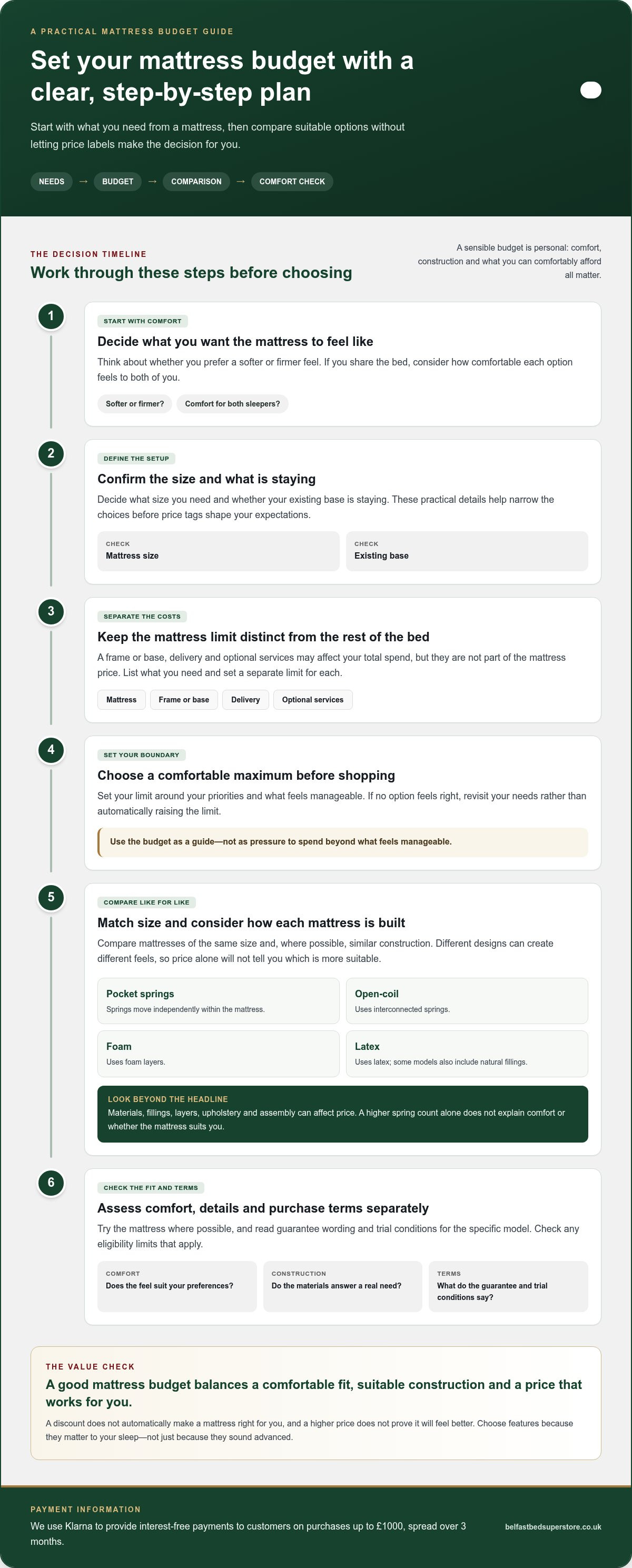
Before looking at prices, decide what you need from the mattress. Consider whether you prefer a softer or firmer feel, whether you share the bed, what size you need and whether your existing base is staying. These practical details will help narrow the choices before price tags shape your expectations.
What does a good mattress budget actually cover?
Keep your mattress budget separate from the rest of the bed. A frame or base, delivery and optional services may affect the total you plan to spend, but they aren’t part of the mattress price. List the items you need and set a separate limit for each, so the cost of a new bed setup doesn’t blur your mattress comparison.
Compare mattresses of the same size and, where possible, similar construction. A pocket-sprung mattress and a foam mattress are built differently, so a simple price comparison won’t tell you which is more suitable. Price is one piece of information, not proof of comfort, support or quality. For an overview of common mattress types and construction, see the Wikipedia article on mattresses.
Why the right amount differs from person to person
Your preferences matter. One person may favour the feel of memory foam, while another may prefer a spring-based design. If you share a bed, consider how comfortable each option feels to both of you. Don’t choose a feature simply because it sounds advanced. Focus on whether it answers a real need.
Materials, fillings and construction can all affect a mattress’s price. Size matters too, so compare the same size when weighing up different options. Brands such as Hypnos, Sealy and Relyon offer different choices, but a brand name alone won’t tell you whether a specific mattress suits your body or preferred feel. Check what it’s made from, how it’s put together and how it feels to you.
So, how much should I spend on a good mattress? Set a comfortable maximum based on your priorities, then compare suitable options within it. If none feels right, revisit your needs rather than automatically raising the limit. Decide whether each feature is essential, useful or irrelevant to your sleep.
Mattress value is the balance between a comfortable fit, suitable construction and a price that works for your budget. That’s more useful than chasing a price tier or assuming the costliest choice must be best. Your budget should help you choose with confidence, not pressure you into spending beyond what feels manageable.
What affects mattress prices and what does extra spend buy?
Mattress prices reflect several design choices, not a simple scale from “basic” to “best”. Size, materials, fillings, construction and brand are the main factors that influence mattress prices. Understanding each one helps you decide whether a higher cost buys something you value. A premium label alone doesn’t guarantee a better night’s sleep.
How size, fillings, and construction influence the price
Larger mattresses generally use more materials, which can affect their price compared with smaller sizes. Start with the size you need, then look at what’s inside. Pocket springs move independently within the mattress, while open-coil designs use interconnected springs. Foam mattresses use foam layers, and latex mattresses use latex. Some models also include natural fillings. Each approach creates a different construction and feel, with no single material right for everyone.
Layers, upholstery and assembly can also influence a mattress’s cost. A higher spring count, for example, is only one specification. On its own, it doesn’t explain how the mattress feels, how its layers work together or whether it suits your preferences. Read the full description instead of treating one prominent number or phrase as a summary of the product. The Better Sleep Council's mattress buying guide offers further advice on understanding options and comparing mattresses.
Brand can play a part too, but it isn’t a substitute for checking construction. Hypnos, Sealy and Relyon are examples of brands with different mattress choices. Compare the details of the particular models you’re considering instead of treating a brand name or price band as a verdict on comfort.
Which details make comparisons fair?
Start with two mattresses of the same size and similar construction. Comparing a foam mattress with a pocket-sprung one can help you explore different feels, but it won’t isolate the effect of price. Note the materials, fillings and construction of each model, then consider how well those features match what you want.
- Size: Check that the options match the space and sleeping arrangement you have in mind.
- Materials and construction: Compare the type of spring system, foam, latex or fillings described, not just headline claims.
- Comfort: Consider the feel you prefer and, where possible, try the mattress rather than relying only on its description.
- Purchase terms: Read guarantee wording and trial conditions separately. Check what applies to the specific mattress, including any eligibility limits.
Promotional wording can catch your attention, but it doesn’t replace clear specifications or a comfort check. A practical answer to “how much should I spend on a good mattress” comes from weighing those details against your needs and spending limit, not paying extra for a feature you won’t use. You can explore mattresses at Belfast Bed Superstore and compare the details of individual models.
How to compare mattress quality, comfort, and value
A useful comparison looks beyond the price tag. Comfort is personal, and a mattress that feels supportive to one person may not feel right to another. Price alone can’t tell you whether a mattress is suitable for your body, preferences or bed setup. Compare the details, then pay attention to how each option feels in practice.
Which mattress specifications deserve attention?
Read the construction and filling information together. Note the spring type or foam layers, any stated fillings and how the mattress is described. Firmness labels can help you shortlist options, but treat them as a starting point, not a promise of how the mattress will feel to you. If you can try it, lie in your usual sleeping position and take time to notice the comfort and support.
Brand names can help organise your search, but compare individual models. For example, Hypnos mattresses and Relyon mattresses give you brand ranges to explore, not a shortcut to deciding which construction or feel is right for you. Check product-specific guarantee terms and trial conditions separately. A trial may have eligibility limits, and guarantee wording can differ, so look at what applies to the particular mattress rather than assuming the terms are the same across a range.
| Criteria | Question to ask | Evidence to compare |
|---|---|---|
| Comfort | Does the feel suit your preference? | Your in-person experience and the firmness description |
| Support | Does it feel comfortable in your usual sleeping position? | How your body feels as you settle on the mattress |
| Materials | What are the main layers and fillings? | The product’s material and filling details |
| Construction | How is the mattress built? | Spring type, foam layers and other stated construction details |
| Guarantee | What terms apply to this model? | The product-specific guarantee wording |
| Trial | Is this mattress eligible, and what conditions apply? | The trial terms for the specific size and model |
How to weigh premium and more affordable options
Extra spend may reflect materials, fillings or more complex construction, but it doesn’t promise better sleep or a longer-lasting mattress. To judge the difference fairly, compare options of the same size and similar construction. If you’re weighing up Sealy models, use the brand range as a starting point, then check each mattress’s specifications and terms rather than relying on the name alone.
Make a short list of what matters most to you, such as a particular feel or filling. Then compare each model against the table. This keeps your decision grounded in useful details and makes it easier to spot when a higher-priced option offers a feature you genuinely want, rather than a headline claim that won’t affect your choice.
A practical way to set your mattress budget before shopping
A little preparation can keep your search focused and make it easier to recognise good value. You don’t need to arrive with a price tier in mind. Set a limit that feels comfortable for your household, decide what matters most, then compare mattresses that meet those needs. This helps prevent attractive extras from pushing your spending beyond what you planned.
Five steps for building a realistic mattress budget
- Choose a comfortable maximum. Base it on your household budget, not a market average or someone else’s suggestion. Treat it as a boundary, not a target you need to reach.
- Keep other bed costs separate. Write down the mattress amount on its own. If you also need a bed frame, base or headboard, give those items separate limits so they don’t obscure what you’re spending on the mattress.
- List your requirements. Note the mattress size, the feel you prefer and any construction details you consider essential. Separate must-haves from features you’d consider only if they fit comfortably within your budget.
- Build a small shortlist. Compare mattresses of equivalent sizes and broadly similar construction. Record their materials, fillings, product-specific guarantee terms and trial conditions so you’re not judging one option by a headline feature alone.
- Try your leading options. If possible, lie on each mattress in your usual sleeping position and notice how it feels. A showroom visit can help narrow your choice, but that first impression is personal and can’t guarantee how you’ll feel after sleeping on a mattress at home.
For a practical example of trying a mattress in person, our article Testing a Hypnos Mattress in Our Cambridge Showroom explores the experience. Use a visit to compare comfort and check whether an option meets your priorities. Don’t treat a higher price or striking specification as a reason to raise your limit.
How to avoid paying for features you do not value
Product descriptions often use terms that sound impressive without explaining whether a feature will make a difference to you. Translate each claim into a simple question: does it change the feel, construction or practical terms in a way I care about? If a detail doesn’t meet a real need, leave it off your priority list.
Decide in advance whether a particular material, filling or brand is important to you. If it is, compare suitable mattresses against your other requirements. If it isn’t, don’t let a premium label alone sway you. After trying your shortlist, consider how each option feels and whether it matches the specifications you value. If none is right, refine your criteria before automatically increasing your budget.
Ready to compare your shortlist? Explore mattresses at Belfast Bed Superstore and try options in person at our Cambridge showroom.
Where to find a good mattress in Cambridge and buy with confidence
Once you’ve set a budget and made a shortlist, see how your options feel. Online specifications help you compare construction and terms, but they can’t tell you exactly how a mattress will feel beneath you. A showroom visit gives you a practical way to test comfort without treating the most expensive option as the automatic choice.
What can you compare in the Cambridge showroom?
Belfast Bed Superstore’s Cambridge showroom has over 20,000 sq ft of space and over 100 beds. Bring your shortlist, try different feels and compare mattresses that match your priorities. Spend a little time lying in your usual sleeping position and notice which options feel comfortable and supportive to you. Your impression is personal, so use the visit to narrow your choices rather than expecting a firmness label or price description to decide for you.
Our range includes well-known brands such as Hypnos, Sealy and Relyon. Explore Hypnos mattresses, then compare individual models by their feel and stated construction. Relyon is another brand to consider. Focus on the particular mattress rather than assuming every option from one brand will feel the same.
Which buying terms can add reassurance?
Before deciding, read the terms for the specific mattress you’re considering. A 30-night sleep trial applies to standard-sized mattresses only and is subject to terms and conditions. Keep that limitation in mind as you compare options, and review the applicable terms rather than assuming a trial applies to every size.
Keep your decision grounded in comfort and the product details you’ve compared. Review the final order carefully, including the mattress size and model, so it matches the option you tried and selected. Our price-match promise is: Find it cheaper? We'll match it.
For another way to explore the range, read our Relyon Mattresses Review 2026 alongside the product information. Whether you’re comparing Relyon with another brand or weighing up two similar constructions, return to the details that matter to you: comfort, materials, size and purchase terms. That makes it easier to choose with confidence, without feeling hurried into a decision.
If you’re ready to try your shortlisted options in person, explore mattresses at Belfast Bed Superstore.
Take the next step towards a mattress that feels right
Your mattress budget doesn’t need to predict exactly what you’ll spend. Treat it as a useful boundary while you explore, and choose based on how a mattress feels and whether its details suit your needs. The right choice is one you feel comfortable with at bedtime and within your household budget.
If you’re still asking how much should I spend on a good mattress, use your shortlist as a starting point, not a commitment. Comparing options in person can turn a list of specifications into a clearer sense of what works for you. Take your time, trust your comfort and remember that a higher price doesn’t automatically mean a better fit.
Visit Belfast Bed Superstore’s Cambridge showroom to try mattresses and find an option that suits your comfort needs and budget.
Frequently Asked Questions
Can a mattress topper make a budget mattress more comfortable?
Yes, a topper can alter the surface feel by adding a softer or more cushioned layer. It won’t replace a mattress that has visible damage or no longer feels supportive. Check the mattress underneath first. If it’s sagging or uncomfortable, a topper may not address the underlying issue. Compare the cost of a topper with replacing the mattress, and consider how much improvement you’re hoping for without assuming it will solve discomfort.
Should I buy a mattress and bed base together?
No, buying them together isn’t essential. If your current base is in sound condition, it may be suitable for a new mattress. Check the mattress maker’s guidance on base compatibility, and consider whether your existing frame feels stable. A mattress that feels uncomfortable on an unsuitable or worn base may feel different on a compatible one. You don’t need to replace a bed that’s still suitable.
How can couples choose a mattress when they prefer different feels?
Talk through what each of you finds comfortable, such as a softer surface or a firmer feel, then try options together if possible. A shared mattress means finding a compromise, so pay attention to both people’s experience and the mattress’s construction. Don’t let price or one person’s preference decide by default. Our experienced team at the Cambridge showroom can help you compare options, while keeping in mind that comfort is personal.
How do I know when my current mattress needs replacing?
Look at its condition, whether you’ve noticed changes in comfort, and whether it still suits your needs. Visible damage or a change in how it feels may be reasons to assess it more closely, but age alone can’t tell you whether it’s right for you. Check the care guidance and inspect the mattress itself. Then decide whether the issue is with the mattress or another part of your sleep setup before setting a replacement budget.
Is buying a second-hand mattress a good way to save money?
A second-hand mattress may cost less, but its wear, care history and overall condition can be difficult to establish. Inspect it carefully for visible damage and consider whether its feel suits your preferences. The potential saving is only one part of the decision: weigh it against uncertainty about how the mattress has been used and whether it meets your comfort needs. A used mattress isn’t automatically unsafe, but it can be harder to compare fairly with a new one.
Can a more expensive mattress guarantee better sleep?
No. A higher price can reflect factors such as size, materials, construction or brand, but it can’t guarantee that a mattress will suit you or improve your sleep. If you’re asking how much should I spend on a good mattress, compare options with similar specifications and try them where possible. Focus on what feels comfortable and appropriate for your needs, then choose within a budget that feels manageable rather than paying more based on price alone.