
 Buy now, Pay later
Flexible Sleeping for Guest Rooms: A Buying Guide
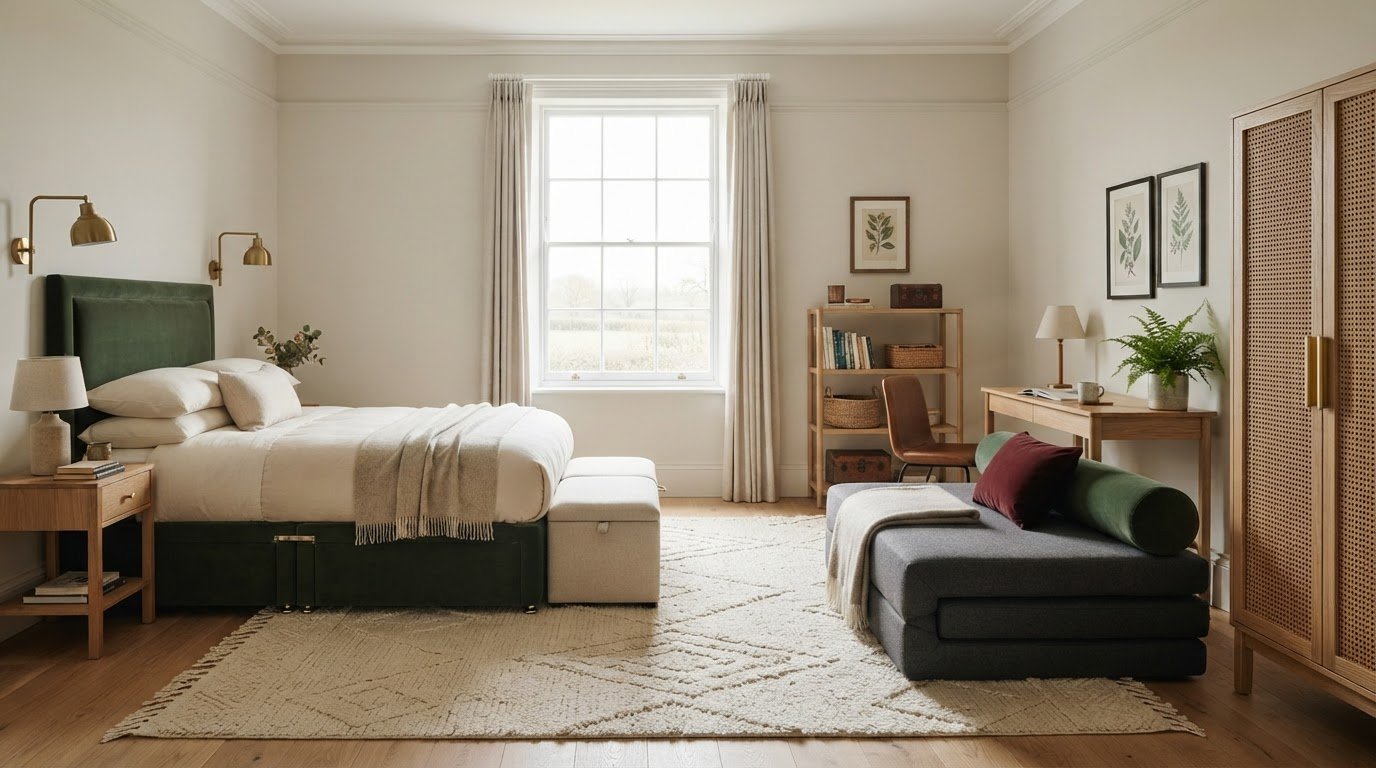
The best guest-room bed may be the one that leaves the room useful when nobody’s staying over. Choosing flexible sleeping arrangements for guest rooms means thinking beyond the occasional overnight visit: a spare room might also need to work as an office, dressing room or place to store everyday essentials.
It’s a familiar balancing act. You want guests to feel welcome, but a bed that dominates the floor can make the room harder to use between visits. The right setup depends on how often you host, how much space you have and what else the room needs to do.
This guide compares practical guest-room arrangements and explains what to consider when weighing sleeping space against storage and day-to-day use. We’ll look at options such as divan and ottoman beds, alongside different bedstead styles, and how they may suit different rooms. When you’re ready to plan a purchase, we use Klarna to provide interest free payments on amounts up to £1000, spread over 3 months.
Key Takeaways
- Choose flexible sleeping arrangements for guest rooms around how you use the space between visits, not just how it works when guests stay.
- Compare permanent beds, sofa beds, daybeds, trundle beds and wall beds by their footprint, setup and fit for your guests’ visit frequency.
- Consider the sleep surface as well as the bed mechanism when weighing comfort for overnight visitors.
- Measure the room, doorways and route for moving furniture, then plan daily activities and access before settling on a layout.
- Explore bedroom choices with helpful guidance at our Cambridge showroom. We use Klarna to provide interest free payments on amounts up to £1000, spread over 3 months.
How should a flexible guest room work between visits?
A spare room often has a busy life of its own. It might be an office during the week, a hobby space at the weekend or a useful place to store household items. The best flexible sleeping arrangements for guest rooms balance a suitable sleep surface with the room’s everyday jobs, so hosting doesn’t mean giving up useful space all year.
Start by considering how often guests stay and how long they visit. An occasional overnight visitor may need a simple setup that’s easy to prepare, while frequent or extended visits can make comfort, privacy and convenient bedside space more important. Think about where guests will put a bag or clothes, too, and whether they can move around without disrupting the room’s other uses.
What will guests need from the room?
Plan for the visit, not just the bed. Consider whether guests can reach the sleeping area easily, have space nearby for essentials and store their belongings without blocking a doorway or walkway. These needs help you set priorities before choosing furniture, rather than trying to fit guest comforts around a bed that takes up more room than expected.
What else must the spare room do?
List its regular roles: working, dressing, reading, pursuing a hobby or storing household items. A permanent bed is ready whenever visitors arrive, but its footprint may limit access to a desk, wardrobe or other furniture. A fold-away format, such as a Murphy bed, is designed to clear floor space when not in use. Choose according to how the room needs to function day to day, not simply how neatly furniture can be tucked away.
A guest room works best when it welcomes visitors without putting everyday life on hold.
Use these four priorities to compare your options:
- Comfort: Match the sleep surface to how often guests stay and how long they visit.
- Floor space: Consider how much room remains for walking, working or other daily activities.
- Setup effort: Think about how quickly and easily the space needs to change between uses.
- Storage: Decide whether the room needs space for guest belongings or household items between visits.
Once you know which priorities matter most, it’s easier to compare bed formats with a clear purpose. We use Klarna to provide interest free payments on amounts up to £1000, spread over 3 months.
Which flexible guest-room sleeping arrangement suits your space?
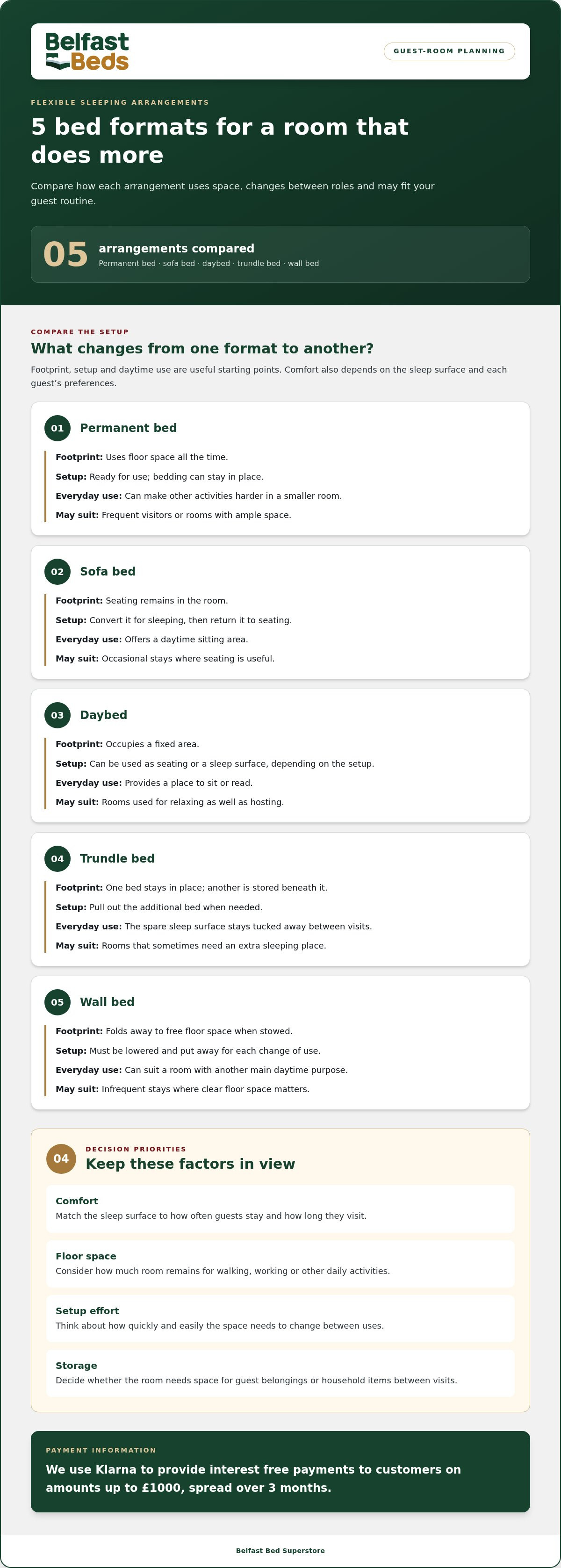
The best fit depends on how often you host, how much floor space you can spare and how quickly the room needs to change function. Compare the arrangements below by their footprint, setup and likely use. Comfort also varies: mattress construction and each guest’s preferences matter, so the bed format alone can’t guarantee a particular night’s sleep.
| Arrangement | Room footprint | Setup | Everyday use | May suit |
|---|---|---|---|---|
| Permanent bed | Uses floor space all the time | Ready for use; bedding can stay in place | Can make other activities harder in a smaller room | Frequent visitors or rooms with ample space |
| Sofa bed | Seating remains in the room | Convert it for sleeping and return it to seating afterwards | Offers a daytime sitting area | Occasional stays where seating is useful |
| Daybed | Occupies a fixed area | Can be used as seating or a sleep surface, depending on the setup | Provides a place to sit or read | Rooms used for relaxing as well as hosting |
| Trundle bed | One bed stays in place; another is stored beneath it | Pull out the additional bed when needed | Leaves the spare sleep surface tucked away between visits | Rooms that sometimes need an extra sleeping place |
| Wall bed | Folds away to free floor space when stowed | Must be lowered and put away for each change of use | Can suit a room with another main daytime purpose | Infrequent stays where clear floor space matters |
When does a permanent bed make sense?
A conventional bed can be a practical choice if guests stay often, visit for longer periods or the room has enough space for the bed without compromising its other uses. Keeping bedding ready can make hosting simpler, with less to set up when visitors arrive. Divan beds, ottoman beds and bedsteads are useful categories to compare; the right one depends on your room and priorities.
When can a convertible or compact option help?
Sofa beds and daybeds combine a sitting area with a place to sleep, while trundle beds keep an extra bed tucked underneath until needed. Wall beds fold away to clear the floor, but require a changeover each time the room switches roles. Compare the effort involved with the space you’ll regain. These flexible sleeping arrangements for guest rooms suit different routines, and no format is universally more comfortable. Consider the mattress as well as the mechanism.
For a closer look at bedroom choices, explore bedroom furniture options. We use Klarna to provide interest free payments on amounts up to £1000, spread over 3 months.
Is a flexible guest bed comfortable enough for overnight visitors?
A flexible setup doesn’t automatically mean an uncomfortable night. The experience depends on both the bed mechanism and the surface a guest sleeps on. A sofa bed, for example, has a folding or unfolding mechanism, but its mattress is a separate consideration. Likewise, a permanent bed may be ready to use, yet its mattress still needs to suit the person sleeping on it.
Flexibility alone doesn’t determine sleep comfort; the sleep surface and the way it suits your guest matter too.
How should you think about mattress comfort?
Start with the mattress, not just the furniture format. People have different support preferences and sleep habits, and a mattress that feels suitable to one guest may not feel the same to another. Its condition matters as well: consider whether it still feels comfortable and even, rather than assuming that a rarely used bed is automatically guest-ready.
For a mattress-led setup, choose a surface with your likely guests and the room’s purpose in mind. If you’re considering a dedicated bed, you can browse our Hypnos mattress range as one option. A visit to our Cambridge showroom can also help you consider different bedroom choices in person, without assuming one type will suit everyone.
With a convertible bed, assess the sleep surface separately from the mechanism. Think about how it’s prepared, whether it feels suitable for the expected stay and how easily you can make it ready. The frame may save space during the day, but it’s the complete sleeping setup that your guest will experience overnight.
How often will guests use the arrangement?
For occasional visits, a convertible option may be a sensible way to preserve the room’s everyday function, especially if you’re happy to prepare it when guests arrive. Frequent or longer stays can make a dedicated, ready-to-use sleep surface more appealing. You won’t need to convert the room each time, and the bed can remain set up for visitors.
There’s no universal point at which a permanent bed becomes the better choice. Consider the pattern of visits alongside your available space and how much preparation feels manageable. If guests stay regularly, giving mattress comfort and a straightforward bedtime setup greater priority may be worthwhile. If visits are occasional, you might prefer to balance the sleep surface with the room’s other uses.
We use Klarna to provide interest free payments on amounts up to £1000, spread over 3 months.
How can you plan a guest room around space, access and storage?
A useful layout starts with the room as it is, not the furniture you hope to fit into it. For flexible sleeping arrangements for guest rooms, map the space, decide what it needs to do day to day, plan clear routes, then select furniture that fits those priorities.
- Map the room. Measure its length and width, and note door swings, window positions, radiators and other fixed features. Mark them on a simple sketch so you can see which areas need to stay clear.
- Identify daily uses. Decide whether the room is mainly for working, dressing, reading or household storage when guests aren’t staying. Give its everyday purpose priority before adding extra furniture.
- Plan access. Picture how someone will enter, reach the sleeping surface and use wardrobes, drawers and windows. Leave practical routes through the room, including access to storage you’ll use regularly.
- Select furniture. Compare bed and storage options against your plan. Check the room, doorways and the route furniture must take through entrances and stairways before settling on a layout. This helps you assess access before making a choice.
What should you measure before choosing furniture?
Measure the usable room area and record where doors open, windows sit and fixed features occupy space. Then consider the path from the entrance to the intended furniture position, including any turns or stairs. A bed may appear to fit on a floor plan but still affect access to a wardrobe or drawer once placed. Sketching the layout helps reveal these pinch points before you decide.
How can the room stay useful between guest visits?
Choose one main everyday purpose first, then add only the furniture that supports it. A desk, wardrobe or chest of drawers can be useful, but its position shouldn’t block the bed or make storage awkward to reach. If storage is a key part of the plan, explore this Storage Beds Cambridge guide. For a broader room plan, see the Cambridge bedroom furniture guide.
A thoughtful layout lets the room work between visits while still feeling prepared for guests. Explore bedroom furniture choices at Belfast Bed Superstore, with your room’s measurements and everyday needs in mind. We use Klarna to provide interest free payments on amounts up to £1000, spread over 3 months.
How can you choose and arrange a guest-room setup with confidence?
Bring your room plan and guest needs together before choosing a bed. The right arrangement should fit the space, suit how often visitors stay and leave the room useful for the rest of your household. There’s no single answer for every home, so use a short checklist to compare options on your terms.
- Room purpose: Decide what the room needs to do between visits, such as working, dressing or storing household items.
- Visitor frequency: Consider how regularly guests stay and whether visits are occasional or extended.
- Comfort priorities: Think about the sleep surface, bedding and access guests will need.
- Available space: Use your measurements to check the bed’s footprint, furniture route and access to drawers, wardrobes and windows.
- Everyday use: Weigh the effort of setting up or putting away a bed against how much clear floor space you gain.
This gives you a practical way to compare flexible sleeping arrangements for guest rooms without relying on a one-size-fits-all recommendation.
What should your final shortlist prioritise?
Compare each option against the checklist: does it fit the room, leave useful routes clear and work with your everyday routine? Consider guest comfort alongside storage, rather than treating either as an afterthought. If you’re choosing a mattress-led setup, trying mattress options in person can help you understand your own comfort preferences. Our Cambridge showroom offers a local place to explore bedroom choices and get helpful guidance as you weigh up the room and its needs.
What support can make the change easier?
Replacing bedroom furniture involves more than selecting a bed. Professional assembly can help with putting new furniture together, while old-bed removal can make it easier to clear the space as part of the change. Our 30-night sleep trial guarantee is another consideration when choosing a bed.
Once you’ve settled on what suits your home, take a look at our beds and bedroom furniture. We use Klarna to provide interest free payments on amounts up to £1000, spread over 3 months.
Choose a guest setup that works every day
The right sleeping arrangement should welcome guests while leaving your spare room practical between visits. Start with the room’s everyday purpose, then weigh visitor frequency, mattress comfort, floor space and the effort needed to prepare the bed. A carefully planned layout can make the space feel ready for visitors without letting furniture take over.
For flexible sleeping arrangements for guest rooms, focus on what suits your household rather than expecting one bed type to work for everyone. Measure first, consider how guests will use the room, and choose a setup that balances sleeping needs with access and storage.
We’re an independent, family-run retailer with a Cambridge showroom and online shopping. If you’re replacing bedroom furniture, professional assembly and old-bed removal can help with the change, and our 30-night sleep trial guarantee offers another point to consider. We also use Klarna to provide interest free payments on amounts up to £1000, spread over 3 months.
Explore beds and bedroom furniture, and take the next step towards a guest room that feels welcoming and works well for your home.
Frequently Asked Questions
What is the most flexible sleeping arrangement for a guest room?
The most flexible choice is the one that suits the room’s main purpose between visits. A sofa bed can double as seating, while a trundle bed keeps an extra sleep surface tucked away. A wall bed can free floor space when folded up, and a permanent bed is ready whenever guests arrive. Compare how each fits your room, how often you host and how much setup you’re comfortable with.
Is a sofa bed comfortable enough for guests?
A sofa bed can be suitable for guests, but comfort depends on its sleep surface, condition and design, as well as the visitor’s preferences. Consider how often it’ll be used and whether the mattress feels appropriate for the expected stay. The conversion mechanism and the mattress are separate considerations: a convenient sofa doesn’t automatically mean the sleeping surface will suit every guest. If possible, assess the mattress feel before deciding.
Can a guest room serve as an office and bedroom?
Yes, a guest room can also function as an office if you plan the layout around both uses. Choose a sleeping arrangement that leaves practical access to the desk, storage and doorway, and consider how much effort it takes to prepare the bed after work. A convertible or fold-away setup may help preserve usable floor space. In Cambridgeshire and across East Anglia, start with room measurements and daily routines before choosing furniture.
How do I choose a bed for a small guest room?
Choose a bed by measuring the room and checking how much clear floor space remains for walking and everyday activities. Consider a compact arrangement, such as a trundle or fold-away bed, if you need the floor area for another purpose between visits. Also account for access to windows, wardrobes and drawers. Flexible sleeping arrangements for guest rooms work best when the bed fits both the room and your hosting routine.
Should a guest room have a permanent bed?
A permanent bed can make sense if guests stay often, visits tend to be longer or the room has space to accommodate it without limiting everyday use. Keeping bedding ready can make hosting simpler. If the room has another regular purpose or space is tight, a convertible option may suit your household better. Consider visitor frequency, available floor space and mattress comfort together rather than assuming every guest room needs a dedicated bed.
What should I measure before buying guest-room furniture?
Measure the room’s length and width, then note door swings, window positions and fixed features that affect furniture placement. Check doorways, entrances and stairways along the route the furniture must take into the room. On your layout, leave practical access to the bed, wardrobes and drawers. These checks help you assess how furniture may fit and move through your home without relying on assumptions based on a floor plan alone.
Can I pay for a bed using Klarna interest-free payments?
Yes. We use Klarna to provide interest free payments on amounts up to £1000, spread over 3 months. This option can help you plan the cost of a bed purchase while choosing an arrangement for your guest room. Belfast Bed Superstore serves customers through its Cambridge showroom and online shopping, so you can explore bedroom choices locally in Cambridgeshire or browse from home across East Anglia.