
 Buy now, Pay later

Best Pillow for Neck Pain for Side Sleepers in the UK
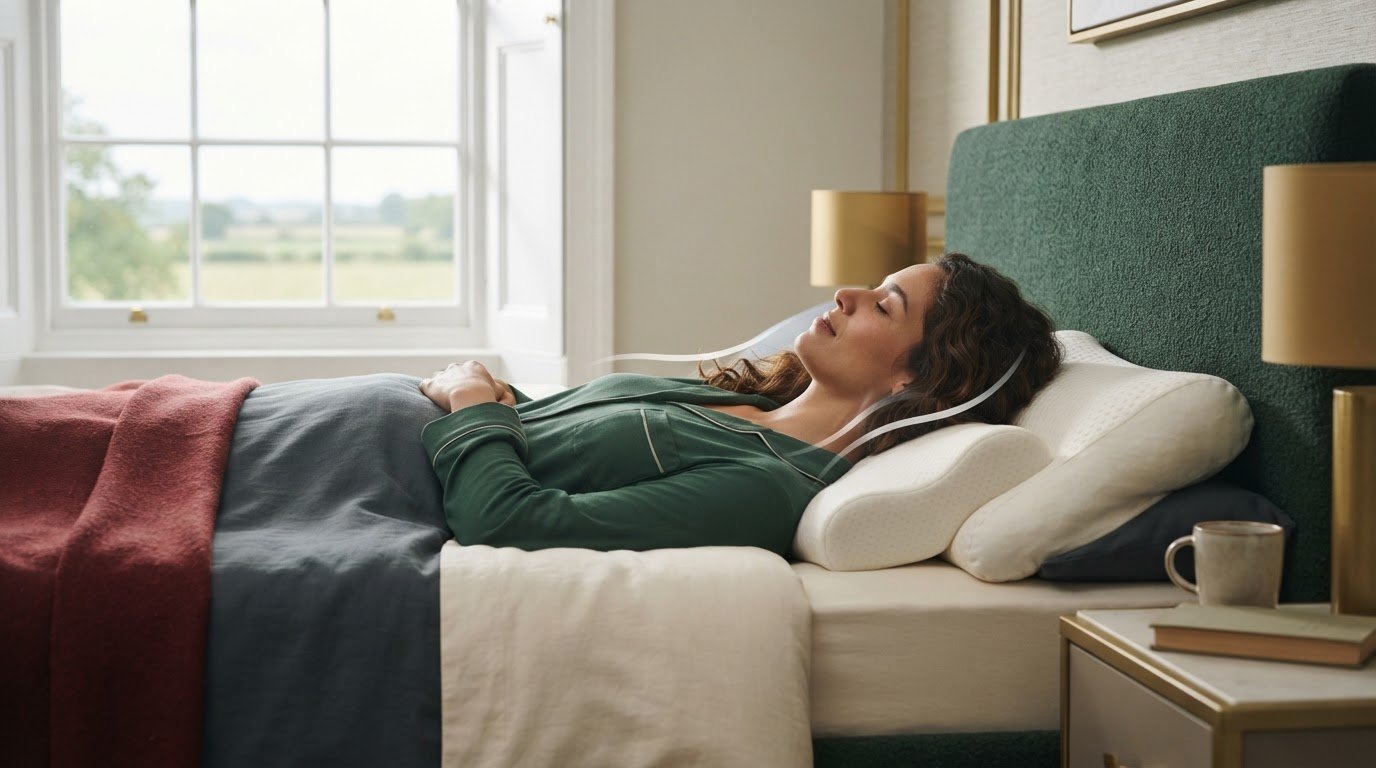
What if the best pillow for neck comfort isn’t the firmest or most expensive, but simply the one that fits you? If you sleep on your side, choosing the best pillow for neck pain side sleeper UK shoppers can find starts with a practical question: does its height fill the space between your shoulder and head without pushing your neck out of line?
It’s understandable to feel unsure. Pillow height, shape and filling all affect how a pillow feels, and memory foam and latex offer different experiences. A new pillow may feel more supportive, but it can’t guarantee that neck pain will go away.
In this guide, we’ll explain how to assess pillow height and alignment, compare memory foam and latex using everyday comfort criteria, and help you decide what may suit your sleeping position. We’ll also cover when it’s sensible to seek health advice if discomfort continues. There’s no single perfect pillow for everyone, but a few practical checks can make your choice clearer.
Key Takeaways
- Choose pillow height by how well it fills the space between your shoulder and head, not by a firmness label alone.
- The best pillow for neck pain side sleeper UK shoppers choose is a personal fit. Consider your usual sleeping position and how your head and neck feel once settled.
- Compare memory foam and latex by their feel, shape, care requirements and fit. Don’t assume one material suits everyone.
- Try the pillow with your usual mattress and reassess comfort in your regular side-sleeping position. A pillow may support comfort, but it isn’t a guaranteed cure for neck pain.
What makes a pillow suitable for neck pain when you sleep on your side?
A suitable pillow helps you settle into a comfortable, neutral position, with your head supported in line with your body rather than noticeably tilted up or down. “Neutral” doesn’t mean holding your neck rigidly straight. It means your position feels relaxed and supported, without an obvious pull or bend as you lie on your side.
The right fit depends on you. Your shoulder width, how your mattress gives beneath your body and the pillow’s feel all affect how much support you need. There’s no single height or firmness that works for every side sleeper, so a label alone can’t tell you whether a pillow will feel right.
How side sleeping changes the pillow-fit question
When you lie on your side, your shoulder rests on the mattress while your head sits above it. This creates a gap between the mattress and the side of your head. The pillow needs to fill that space comfortably. Too little support may let your head dip towards the mattress, while too much may push it upwards. Either position can feel awkward.
Shoulder width affects the size of the gap, but it isn’t the only factor. A mattress that compresses more beneath your shoulder may leave less distance for the pillow to bridge than a firmer-feeling surface. That’s why choosing the best pillow for neck pain side sleeper UK shoppers can feel confident about starts with your own sleep setup, not a universal height recommendation. A fixed height would be guesswork without considering your position and how your mattress responds.
Some pillows have a contour rather than an even profile. The Orthopedic pillow article describes designs intended to support the head and neck. Treat shape as one comparison point, not proof that a pillow will suit you. Comfort and fit still depend on the individual.
What a pillow can, and cannot, do for neck discomfort
A pillow is a bedding choice, not a guaranteed remedy. One that fits well may feel more comfortable and help you maintain a relaxed head-and-neck position while resting. Neck discomfort can have different causes, so changing your pillow can’t establish what’s behind the symptoms or promise to resolve them. Alongside finding the right bedtime support, addressing muscle weakness through targeted conditioning can also help, with dedicated training equipment available at iron-neck.co.uk.
Occasional stiffness on waking is different from pain that persists, worsens or disrupts daily life. Notice whether discomfort changes as you adjust your pillow, but don’t assume continued pain means you simply need a different filling or shape. If symptoms are ongoing or getting worse, consult current NHS guidance on neck pain or speak with a healthcare professional. Seek medical advice promptly if you’re concerned about your symptoms. A pillow may support a more comfortable night, but health concerns deserve appropriate guidance too.
How pillow height and sleeping posture affect neck alignment
Neutral alignment is a useful comfort guide, not a rigid pose you need to hold. On your side, your head should feel comfortably supported rather than obviously tipping towards the mattress or being pushed upwards. Look for a relaxed position that feels natural, not a precise angle or a clinical test.
Pillow height is only part of the picture. Your shoulder width affects the space between your head and the mattress, while the mattress influences how far your shoulder settles into the surface. Together, these details help explain why a pillow that feels comfortable for one person may feel too high or too low for another.
Assess the gap between your shoulder and head
Settle into your usual side-sleeping position and notice the line of your head in relation to your body. Does your head seem to tip down towards the mattress, or does the pillow push it up? This is a comfort check, not a way to diagnose the cause of neck pain.
Shoulder breadth can change the space the pillow needs to accommodate. For example, someone with broader shoulders may have a different gap to fill from someone with narrower shoulders, even if both sleep on their sides. That doesn’t automatically mean one person needs a particular pillow height. Mattress give and personal comfort matter too.
Judge the fit in your normal sleeping position, with your shoulder resting naturally on the mattress. If you keep shifting your head to get comfortable, note that when comparing pillows. It’s a practical observation, not proof that your pillow is causing symptoms.
Account for the mattress beneath your pillow
Your mattress changes the starting point for pillow fit. On a softer-feeling surface, your shoulder may settle differently than it does on a firmer-feeling one. That can alter the distance between your head and the mattress, so the same pillow may feel different after a change of bed or sleeping surface.
Consider the whole setup rather than choosing a pillow in isolation. If you test a pillow on a different bed, the result may not reflect how it feels at home. Settle into your regular posture and notice whether your head feels supported without pressure or an obvious tilt. No mattress brand or firmness guarantees a particular alignment for every sleeper.
Side-sleeper pillow fit depends on shoulder width, mattress feel and the height that leaves your head comfortably supported. Use these factors as a starting point, then let your comfort guide your comparison. When exploring pillow options for side sleeping, keep your usual mattress and sleep position in mind.
Memory foam, latex and pillow shapes: what should side sleepers compare?
Material and shape influence how a pillow feels, but neither tells you on its own whether it will suit your side-sleeping position. Compare the feel, profile, care guidance and fit together. Memory foam and latex are two pillow categories to consider. Details vary between individual pillows, so use the product information rather than making assumptions about the material alone.
Compare memory foam and latex by feel and fit
Memory foam is often chosen for its closer, moulded feel, while latex is commonly associated with a more buoyant, responsive feel. These are broad impressions, not guarantees: construction and the individual product affect how each pillow feels. Neither material can be said to prevent or cure neck pain. The useful question is which feel lets you rest comfortably in your usual position.
Feel: Memory foam may feel more moulded; latex may feel more responsive. Personal preference and the specific pillow matter.
Shape: Check the actual profile. A material doesn’t automatically mean a pillow has a contour or a particular height.
Adjustability: Don’t assume a pillow can be altered or filled to your preference. Look for clear product details if adjustability matters to you.
Care: Check the care instructions for the individual pillow. Don’t assume the whole pillow can be washed or that care is the same across materials.
Fit: Consider how its height and feel work with your shoulder, sleeping posture and mattress. A material label can’t establish that fit on its own.
Choose a shape without assuming one design suits everyone
A conventional, more even profile differs from a shaped or contoured profile, which may have a raised or curved area for the head or neck. That change in shape can affect how the pillow feels beneath you, but it doesn’t make the design a better fit for every side sleeper. Consider whether its profile feels comfortable in your regular posture and whether its dimensions suit your bed and pillowcase.
Check the product description for shape, measurements and care details rather than relying on a broad category name. When comparing options, judge the pillow in the position you usually sleep in. A profile that looks supportive on its own may feel different once your head settles onto it.
The best pillow for neck pain side sleeper UK shoppers choose is not determined by filling or shape alone. Weigh up what you know about your sleep position, then compare the specific pillow’s feel, profile and care instructions. Explore our memory foam and latex pillow options as you narrow down which category feels most promising.
How to check whether a side-sleeper pillow feels right
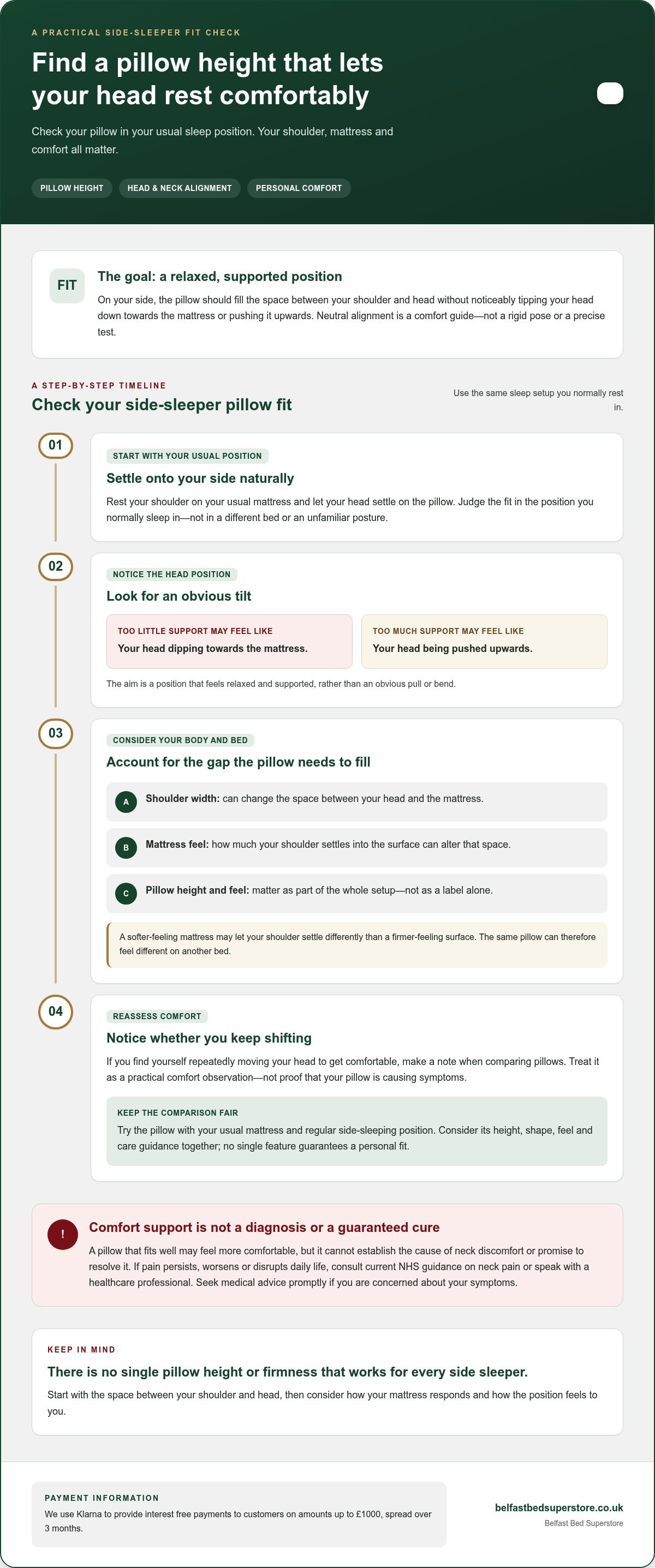
A simple, repeatable check can help you compare pillows without treating one night’s sleep as a verdict. Use the same bed and your usual side-sleeping posture where possible, then pay attention to how the pillow feels beneath your head and neck. The aim is to gather useful comfort clues, not to test for or diagnose a neck problem.
Use a calm, repeatable comfort check
- Settle as you normally would. Lie on your side on your usual mattress and let your shoulder rest naturally. Avoid propping yourself up or changing position just to make the pillow appear to fit.
- Notice the space beneath your head. Does the pillow support the gap between your shoulder and head comfortably, or do you feel pushed upwards or left dipping towards the mattress?
- Check for ease, not perfection. Notice whether your head and neck feel relaxed and whether you repeatedly adjust the pillow to get comfortable. There’s no need to measure an angle or hold a fixed posture.
- Reassess in your usual routine. Your posture can shift during the night, so one position at bedtime won’t tell the whole story. Notice how the pillow feels during your normal sleep and whether the same comfort pattern recurs.
Keep the comparison fair: try the pillow with your regular mattress and familiar sleeping posture. If you test it on a different bed, the feel may change because the surface beneath your shoulder is different. A brief note in the morning about comfort and any repeated need to reposition can help you compare impressions without setting an arbitrary pass-or-fail threshold.
One night isn’t proof that a pillow is suitable long term, nor does it show that a pillow has treated or caused neck pain. The best pillow for neck pain side sleeper UK readers settle on is a personal comfort choice, not a medical conclusion. Give greater weight to a consistent pattern than to one unusually good or uncomfortable night.
Know when pillow changes are not enough
Ongoing discomfort can have causes beyond pillow fit, so don’t assume persistent pain means you need to keep changing pillows. If symptoms continue, worsen, feel severe or concern you, seek advice from a healthcare professional rather than relying on bedding adjustments alone. The NHS guidance on neck pain and a stiff neck explains when to seek further help. Use it if you’re unsure what to do next.
Comfort checks are useful for choosing bedding, but they can’t assess your health. Keep your observations practical: how the pillow feels in your usual position, whether discomfort keeps returning, and whether the problem is affecting daily life. If you’re ready to compare pillows, explore our pillow range with your usual sleeping posture and mattress in mind.
Find a pillow that fits your sleep, and get helpful local guidance
A considered choice comes down to how the pillow works for you in bed, not a claim that one type is universally best. Start with your sleeping position, then consider the space between your shoulder and head, how your mattress feels beneath you, and which material you prefer. This keeps the decision practical: fit first, feel next.
What to compare before choosing a pillow
As you compare options, look at the details that can make a difference to everyday comfort. Check each pillow’s dimensions and shape, note whether it’s memory foam or latex, and read the care information. Consider these details together rather than letting a single feature decide for you.
- Sleeping position: Keep your usual side-sleeping posture in mind. A pillow should feel comfortable in the position you actually use, not just look suitable on a product page.
- Dimensions and shape: Consider whether the profile appears to suit the space between your shoulder and head. Contoured and more conventional shapes may feel different, so focus on the pillow’s actual form.
- Material: Memory foam and latex are two categories to compare. Your preferred feel matters; neither category is automatically right for every sleeper.
- Care details: Follow the product’s care instructions rather than assuming all pillows can be cleaned in the same way.
This is a useful way to narrow the choice without expecting a pillow to fix neck pain. The best pillow for neck pain side sleeper UK shoppers choose depends on their own comfort, usual posture and bed setup. If symptoms persist or cause concern, pillow selection isn’t a substitute for appropriate health advice.
Explore pillow options with a local retailer
We welcome customers to browse memory foam and latex pillows through our Cambridge showroom and online shop. Seeing options in person or comparing details online can help you consider shape, dimensions and material while keeping your own sleeping position at the centre of the decision. We serve customers across Cambridgeshire and East Anglia.
We use Klarna to provide interest free payments on amounts up to £1000, spread over 3 months. Consider the pillow’s fit and care guidance alongside any payment choice, so the decision feels right for your needs and budget.
Take your time, compare the details, and choose based on the comfort you’re looking for, without expecting a particular pillow to guarantee pain relief. Explore our pillow options online or visit our Cambridge showroom to browse in person.
Make your next pillow choice with confidence
Before browsing, jot down what matters most to you: the position you usually sleep in, the feel you enjoy and any practical care preferences. This gives you a simple way to compare options without getting distracted by labels or assuming there’s one perfect choice. The best pillow for neck pain side sleeper UK shoppers settle on is the one that feels like a sensible match for their sleep, not a guaranteed solution for discomfort.
Comfort is personal, so take time to choose. Belfast Bed Superstore is an independent family-run retailer established in 1990, with a considered range of bedroom essentials. Use your priorities as a guide as you browse, and focus on finding an option that feels right for your routine.
Explore our pillow options and take the next step towards a more comfortable-feeling bedtime.
Frequently Asked Questions
Is a firm or soft pillow better for neck pain when side sleeping?
Neither a firm nor a soft label alone tells you whether a pillow will suit you. Consider whether its height fills the space beneath your head comfortably, along with your shoulder width, mattress feel and personal preference. For instance, a pillow that feels pleasantly firm in your hand may not feel comfortable once you lie on your side. If symptoms continue, consult current NHS guidance or speak with a healthcare professional.
What height pillow is best for a side sleeper with neck pain?
There isn’t one height that suits every side sleeper. The space between your shoulder and head, your shoulder width and how your mattress lets your shoulder settle all affect the fit. Assess the pillow while lying in your normal position rather than choosing by a height label alone. The best pillow for neck pain side sleeper UK shoppers consider is a personal fit, not a standard measurement. Seek professional advice if pain persists or worries you.
Can a memory foam pillow help with neck pain?
A memory foam pillow may be worth comparing, but the material by itself can’t guarantee relief from neck pain. Shape and height affect how the pillow feels, and individual comfort matters too. Check the product details, then consider whether the pillow feels comfortable beneath your head in your usual side-sleeping position. A change in bedding can’t identify the cause of ongoing symptoms, so seek healthcare advice if pain persists or concerns you.
Is latex or memory foam better for side sleepers?
Neither category is automatically better for every side sleeper. Compare how each feels, along with the pillow’s shape, dimensions and care information. Then consider how it fits with your shoulder width and mattress, since the same pillow may feel different on different beds. Belfast Bed Superstore offers both memory foam and latex pillow categories. For shoppers across Cambridgeshire and East Anglia, the choice can start with the feel and fit you prefer.
Can the wrong pillow cause neck pain?
An uncomfortable or poorly fitting pillow may contribute to discomfort for some people, but pillow fit alone can’t tell you what’s causing your neck pain. Notice whether a pillow feels awkward in your normal sleep position, but don’t assume it’s responsible. Neck discomfort can have different causes. If symptoms are persistent, severe or concerning, consult current NHS guidance or speak with a healthcare professional rather than relying only on a pillow change.
How do I know if my pillow is too high for side sleeping?
If your head feels pushed upwards or held at an uncomfortable tilt, the pillow may not feel like a good match. This is a comfort check, not a diagnostic test. Consider your shoulder width and how much your mattress gives beneath you, as both can affect the space the pillow needs to fill. Reassess in your normal sleeping position. If symptoms continue or worsen, seek medical guidance rather than relying on a fit check.
When should I seek medical advice for neck pain rather than change my pillow?
A pillow choice can’t diagnose neck pain or replace medical advice. If your symptoms are persistent, severe, worsening or concerning, consult current NHS guidance on neck pain and speak with a healthcare professional about what to do. You don’t need to keep changing pillows in the hope of finding an explanation. Treat pillow selection as a comfort decision, separate from getting advice about your health. Once you’ve addressed your health concerns, browse our pillow options to compare memory foam and latex pillows.